
Reading whole pages without taking them in—want five practical habits for checking your understanding and finding where to restart?
Why Can't I Focus When Reading? 5 Fixes to Try Today
Reading whole pages without taking them in? Try five small habits to recall the main point, spot gaps, and return to the text.
“Why can't I focus when reading?” you wonder, reaching the bottom of a page with little idea what it said. You turn back, and the words look familiar. Yet explaining the point feels hard.
Perhaps it is a school chapter, a work report, or a novel before bed. That moment alone cannot tell you why reading felt hard. The five habits below offer places to look: what you recall, what pulls you away, and what remains unclear.
Why cant i focus when reading: Five habits for staying with the page
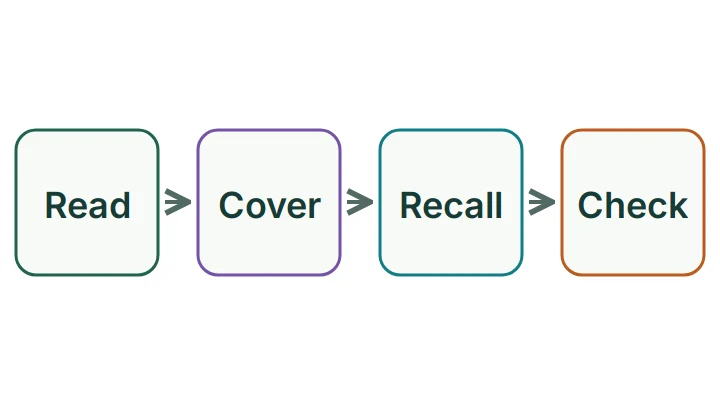
Suppose your paragraph explains why a river floods. Looking away, you try, “More water reaches the river than its banks can hold.” Back in the text, you notice a cause your summary left out.
The useful part is that checking follows recall. For this passage, your answer could be spoken, thought, or jotted down. In this trial, you attempt recall before the text supplies the answer.
If nothing comes back, try two sentences and find what they say together. The two sentences might contain just the cause you need to explain. (Roediger & Karpicke, 2006)
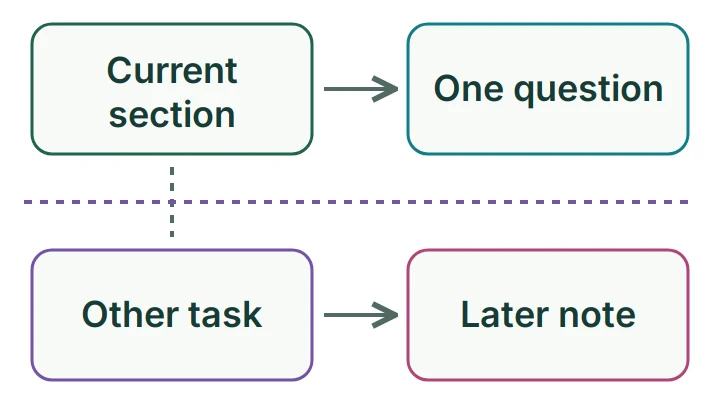
You meant to read about the river, but partway through, a reply you owe comes to mind. The next lines pass while you compose that reply. Now you have a specific distraction to address.
A brief note might say, “Reply to Sam after this section.” Then the reading target stays “Find why the river floods.” With the reply recorded, you have a clear place to return to after reading. (Leroy, 2009)
The target can change with the passage. In a work report, “Find the reason for the delay” gives the section a clear question. You can use it to decide where this reading stretch ends.
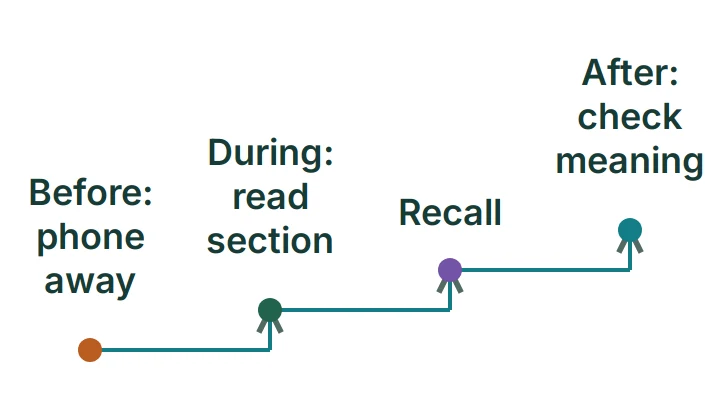
The river paragraph gives this trial a clear end. After reading it, you can ask what you understood and whether you kept reaching for the phone. Those answers help you decide whether to use the setup again.
If the passage is on your phone, this particular trial may be awkward. The study gives no tested reading routine for that case. You can still use the recall step with the text on screen.
Quick tip · Remember this
Quick tip: At the next section break, ask, “What was that section saying?” This is a practical check based on observational reading evidence. (Li & Gan, 2022)
You remember rain and rising water from the river passage. Yet you cannot explain why one town flooded and another stayed dry. The facts came back, but a link is missing.
A question such as “What explains the difference between the towns?” makes that gap clear. It points you toward the sentence about what happened in each town. (Li & Gan, 2022)
This question about meaning also matters when a page contains a number. Consider a different subject: a computer study of solitaire. It estimated thoughtful Klondike winnability at 81.945% ± 0.084%, with every card's rank and suit known.
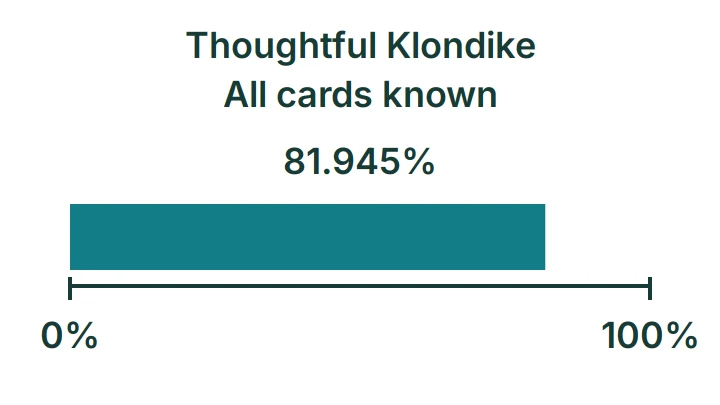
That estimate concerns which deals can be won under those conditions. Ordinary hidden-card player wins and reading gains are outside its scope. Understanding the number means keeping its task and conditions attached.
Back at the river passage, perhaps “however” marks the turn you missed. You know the word, yet have lost track of which earlier idea it changes. Or a key term remains unfamiliar.
Try naming the exact obstacle: “What does this term mean here?” or “Which idea does ‘however’ change?” Then revisit that sentence with the question in mind. You now have a specific part of the passage to work through. (Li & Gan, 2022)
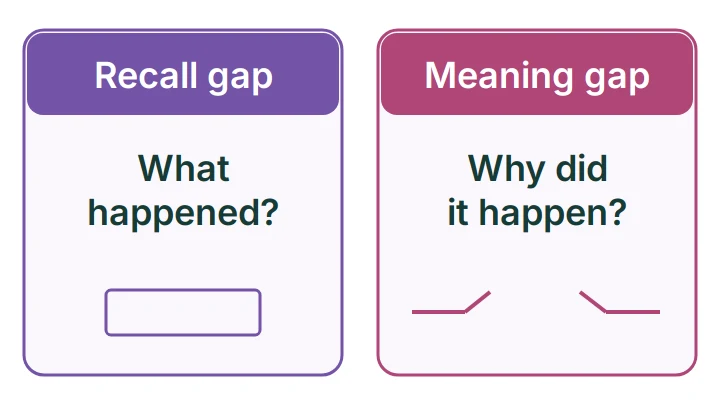
The five habits give you different starting points. These examples help match the next small trial to what happened on the page.
| What happened? | A possible next step |
|---|---|
| The paragraph feels blank. | Cover a smaller section and recall it. (Roediger & Karpicke, 2006) |
| Another task keeps intruding. | Write its next step for later. (Leroy, 2009) |
| You keep reaching for your phone. | Try a section with it away. (Ward et al., 2017) |
| Details return, but meaning stays unclear. | Name the missing link or word. (Li & Gan, 2022) |
Two optional games, with different tasks
Schulte Table asks you to tap shuffled numbers in order. Word List asks you to study words, then select them from a larger grid containing new words.
 Schulte Table
 Word List
These are optional practice games. The supplied studies establish no reading benefit from either one. The page itself remains where you check what you understood.
For broader context, see Cleverini research and countries. Each paper's task and limits matter when assessing a claim about a reading habit.
FAQ
- Why can't I focus while reading? This moment alone cannot tell you the cause. An unfinished task, a nearby phone, or an unclear passage may offer a place to start.
- How can I focus on one page at a time? Try giving one short section a question to answer. This is a practical extension of work-task evidence. (Leroy, 2009)
- What if I read without taking anything in? Try covering one short section and recalling its point. Reopen it to check the gap. (Roediger & Karpicke, 2006)
- Does recall help more than rereading? In the prose experiments, recall practice helped delayed retention more than restudy. Restudy did better on the immediate test. (Roediger & Karpicke, 2006)
- How can I reduce phone distractions while reading? Try one short section with your phone in a bag or another room. Check whether that setup suited you. (Ward et al., 2017)
Sources
-
(Roediger & Karpicke, 2006). Henry L. Roediger, Jeffrey D. Karpicke. (2006). Test-Enhanced Learning. Psychological Science. Source.
-
(Leroy, 2009). Sophie Leroy. (2009). Why is it so hard to do my work? The challenge of attention residue when switching between work tasks. Organizational Behavior and Human Decision Processes. Source.
-
(Ward et al., 2017). Adrian F. Ward, Kristen Duke, Ayelet Gneezy, Maarten W. Bos. (2017). Brain Drain: The Mere Presence of One’s Own Smartphone Reduces Available Cognitive Capacity. Journal of the Association for Consumer Research. Source.
-
(Blake & Gent, 2026). Charlie Blake, Ian Gent. (2026). The Winnability of Klondike Solitaire and Many Other Patience Games. Journal of Artificial Intelligence Research. Source.
-
(Li & Gan, 2022). Hong Li, Zhengdong Gan. (2022). Reading motivation, self-regulated reading strategies and English vocabulary knowledge: Which most predicted students’ English reading comprehension?. Frontiers in Psychology. Source.
More from the blog

How to Improve Concentration: A Simple Daily Routine
Learn how to improve concentration with five practical habits for fewer interruptions, clearer task returns, and brief pauses, with evidence explained.

How to Focus on Homework: 5 Fixes That Actually Work
Learn how to focus on homework with five evidence-informed habits, practical steps, and clear research limits for students and parents.

