
Phone pulling you away from homework—could five practical habits help you start, stay with one assignment, and return after breaks?
How to Focus on Homework: 5 Fixes That Actually Work
Learn how to focus on homework with five evidence-informed habits, practical steps, and clear research limits for students and parents.

- Start with the first small homework task. [Source citation]
- Remove distractions from your workspace. [Source citation]
-
Take a short break when needed. [Source citation]
-
Choose one assignment to begin.
- Set a short timer and work on that assignment.
- Review what you completed and choose the next step.
Wondering how to focus on homework while your notebook sits beside a buzzing phone? Start by moving the phone away and choosing one small task. These steps apply research on phones and task switching to a homework setup.
(Ward et al., 2017) (Leroy, 2009)
Perhaps you have read the same line three times. The page is open, but your thoughts keep returning to a message or another assignment. “Just concentrate” gives you little to work with.
The five fixes below offer options to try, based on evidence with limits. Direct research on homework at home is limited. Each habit gives you a concrete change and explains what its source tested.
How to focus on homework: five habits to try
The assignment decides what belongs on the desk. A paper worksheet may let you put your phone in another room. An online reading task may need a screen the whole time.
In a shared home, the phone plan also needs to fit daily life. “I'm putting this away until I finish this section” is one possible way to explain the setup. Where the phone goes can depend on how someone needs to reach you.
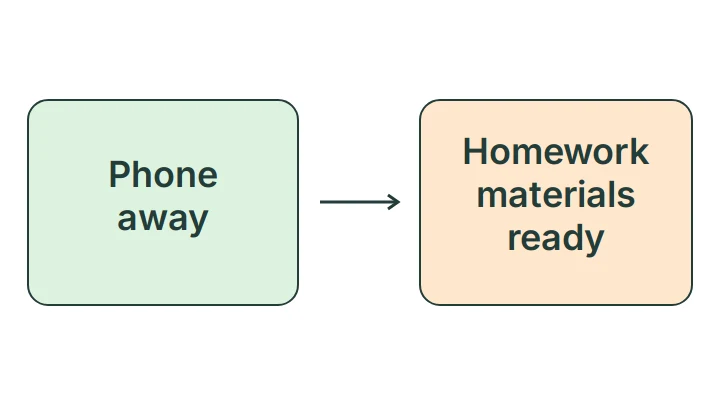
With the required materials ready, there is still a choice to make: which piece of work comes first? That is where the next habit begins.
One active assignment may need a book, a worksheet, and a school website. Those tools can all serve the same piece of work. The distinction is between tools for this assignment and other work asking for a turn.
A finish line can also be smaller than a whole page. These examples turn a broad task into a visible action. They are practical choices based on the switching research.
| Broad task | Small finish line | Tools for this step |
|---|---|---|
| Do science | Read the question and mark what it asks | Question sheet |
| Work on maths | Attempt the next problem | Worksheet and needed notes |
| Study history | Read one assigned section | Book or assigned webpage |
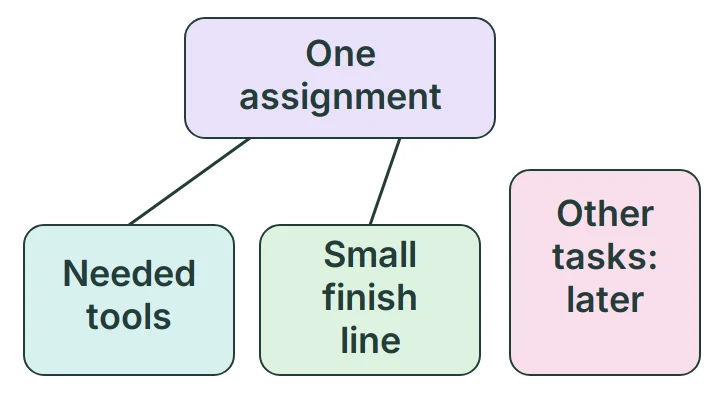
If another task comes to mind, a few words on paper can hold its place until your stopping point. That note is an editorial aid for keeping this routine simple. (Leroy, 2009)
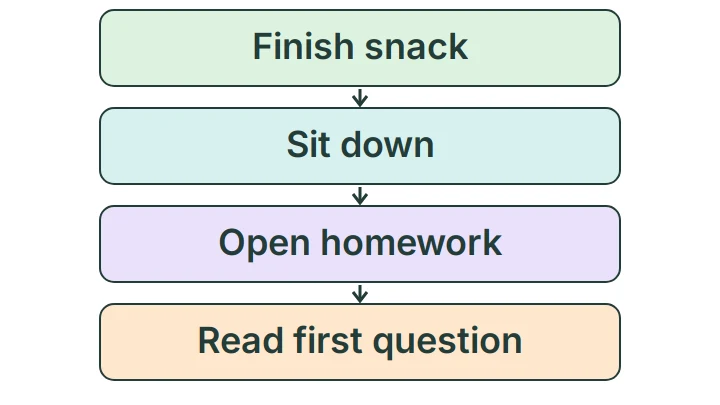
Your materials and task are ready; now the plan needs a start. An if-then plan names a moment you can spot and the action that follows. Finishing a snack or clearing the table can be a cue.
“Study later” leaves the start open. “After my snack, read the first question” tells you what the start looks like. If home routines vary, the cue can fit that day's plans.
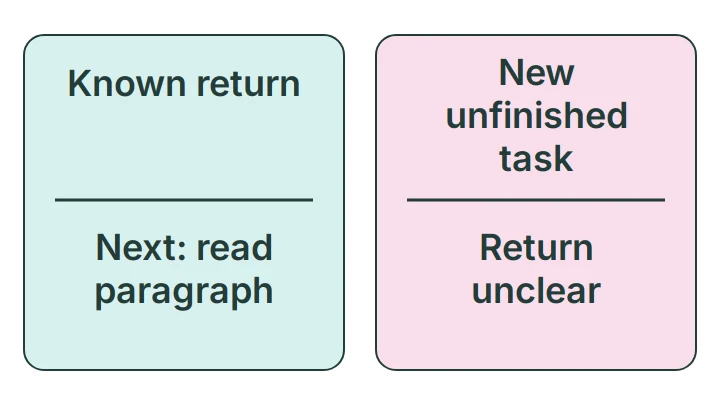
Once you have begun, a pause raises a new question: what will you return to? “Read the next paragraph and find its main claim” names a clear return point. The note adapts the switching findings to this routine.
These sources support no single work-and-break timer. A timer can mark the end of your chosen pause, but that is a practical aid. The useful check is whether you return to the assignment as planned.
Quick tip · Remember this
Quick tip: Before pausing, leave a short note naming the next step in the same assignment. This is a practical return aid drawn from switching research. (Leroy, 2009)
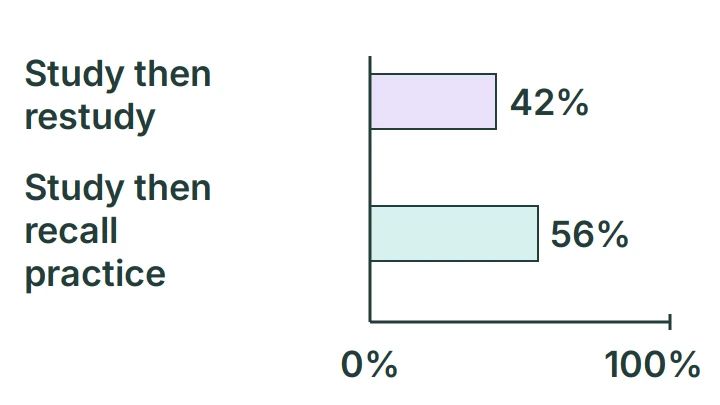
Back at the page, reading the words may leave you unsure what you have learned. A brief recall attempt gives you something to compare with the passage. For example, you could cover it and write its main point in your own words.
In the study's first experiment, one-week recall was 42% after restudy and 56% after recall practice. The measure was the mean share of prose ideas recalled. Those percentages describe later recall, rather than the share of students who improved.
Optional games and a free guide
Games offer a different task from homework. The two below have distinct rules; neither has an established homework benefit in the studies cited here.
- Schulte Table is free browser play with 3×3, 4×4, or 5×5 grids. Tap numbers in order; results show time, mistakes, and pace. One round with a one-minute cap is an optional editorial warm-up idea.
- Shoal has free 45-second runs. In Lead mode, follow the center fish; in Crowd mode, follow the majority. Watch the changing mode banner and use arrow keys, swipes, or buttons.
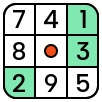 Schulte Table
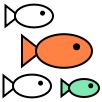 Shoal
Curious about gameplay patterns? Cleverini's research page offers a place to explore that interest. The homework routines above draw on the five sources below.
Common homework questions
-
Why can't I focus on homework? A nearby phone or thoughts about unfinished tasks may be part of the picture. These studies cannot identify your own cause. (Ward et al., 2017) (Leroy, 2009)
-
How can I focus on school work? Try a clear start cue and one small finish line. This applies findings on planning and task switching to school work. (Gollwitzer & Sheeran, 2006) (Leroy, 2009)
-
Why can't I focus while studying? Switching between unfinished tasks is one possible obstacle. Notice when you switch, then try keeping one assignment active. (Leroy, 2009)
-
How can I improve focus while studying? Try changing your phone setup first. Recall practice can help later memory, which is a separate outcome from focus. (Ward et al., 2017) (Roediger & Karpicke, 2006)
Sources
-
(Ward et al., 2017). Adrian F. Ward, Kristen Duke, Ayelet Gneezy, Maarten W. Bos. (2017). Brain Drain: The Mere Presence of One’s Own Smartphone Reduces Available Cognitive Capacity. Journal of the Association for Consumer Research. Source.
-
(Leroy, 2009). Sophie Leroy. (2009). Why is it so hard to do my work? The challenge of attention residue when switching between work tasks. Organizational Behavior and Human Decision Processes. Source.
-
(Ariga & Lleras, 2011). Atsunori Ariga, Alejandro Lleras. (2011). Brief and rare mental “breaks” keep you focused: Deactivation and reactivation of task goals preempt vigilance decrements. Cognition. Source.
-
(Gollwitzer & Sheeran, 2006). Peter M. Gollwitzer, Paschal Sheeran. (2006). Implementation Intentions and Goal Achievement: A Meta‐analysis of Effects and Processes. Advances in Experimental Social Psychology. Source.
-
(Roediger & Karpicke, 2006). Henry L. Roediger, Jeffrey D. Karpicke. (2006). Test-Enhanced Learning. Psychological Science. Source.

More from the blog
Why Can't I Focus When Reading? 5 Fixes to Try Today
Reading whole pages without taking them in? Try five small habits to recall the main point, spot gaps, and return to the text.

How to Improve Concentration: A Simple Daily Routine
Learn how to improve concentration with five practical habits for fewer interruptions, clearer task returns, and brief pauses, with evidence explained.

