
Losing focus after a few minutes and want five small habits to try, with clear steps and science checks?
How to Improve Attention Span: Small Daily Steps
Learn five small attention habits, what the studies support, and how to try clearer task steps, brief pauses, phone changes, and sleep time.
If you’re wondering how to improve attention span, you may reach the end of a page yet cannot say what you just read. You go back to the start. A few minutes later, you have lost the thread again.
If you are asking how to improve attention span, start with that real task. The five habits below give you small changes to test. Each science check shows how far the evidence reaches.
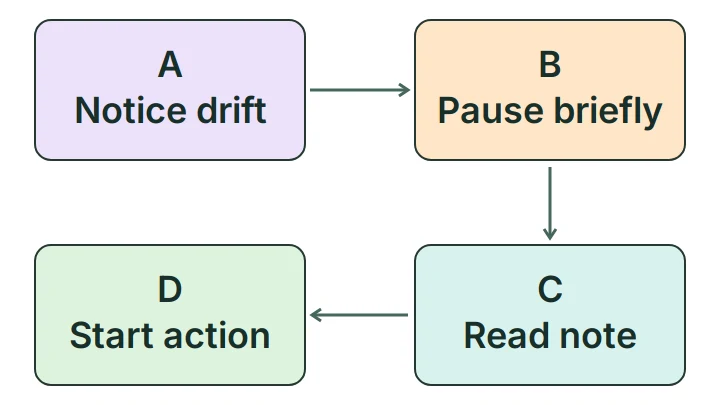
Use a simple cue to help you find your way back. During your next task, notice where you stop and how you begin again. This gives your trial something concrete to track.
5 habits to try during your day
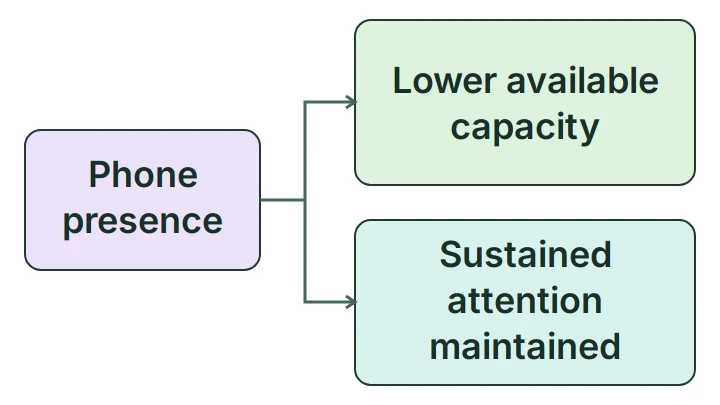
For the page you keep rereading, the question is small: can you finish that section with this setup? Reaching for the phone is one thing you can note. A better session gives you a reason to try again, though it cannot prove what caused the change.
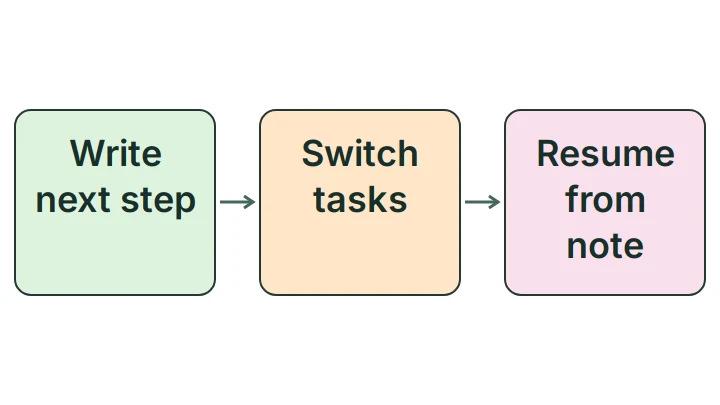
A useful note tells you where to put your hands or eyes when you return. “Study more” still leaves you choosing what to do. These examples make the suggested routine easier to picture (Leroy, 2009).
| Task you leave | A clear next-step note |
|---|---|
| Reading a page | Read the paragraph below the heading. |
| Writing a reply | Open the draft and finish the first answer. |
| Filling in a form | Find the date needed for the next box. |
The pause need not make your mind feel blank to be useful. In that study, performance held up even though mind-wandering persisted. That leaves a more practical question for your trial: what happened when you came back (Chen et al., 2026)?
Quick tip · Remember this
Quick tip: Leave your next-step note in view before a pause. This combines two suggested routines; the studies did not test that exact combination (Leroy, 2009); (Chen et al., 2026).
You now have a sequence you can observe: stop, leave a note, pause, and begin again. One named action makes the return easy to describe. “I read the marked paragraph” tells you more about this trial than “I tried harder.”
Work shifts, family care, or a shared room can limit your choices. Your notes can include those limits without turning them into another task to fix. One hard day with the page is still just one day's experience.
Where games fit
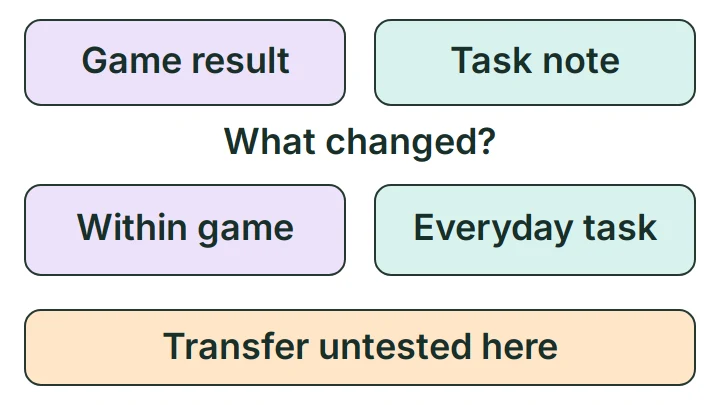
The same care applies if you enjoy attention games. A result tells you what happened in that game. The studies used for these habits do not establish that playing either game below improves focus outside it.
Schulte Table asks you to find and tap shuffled numbers in order. Its smaller grid offers a starting option. The result includes time and mistakes, so speed is only one part of the record.
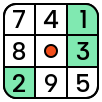 Schulte Table
Lighthouse sets two jobs at once: respond to the lamp's target symbol and spot ships near the edges. Buoys and seagulls are objects to leave alone. It is a different game task from searching a number grid.
 Lighthouse
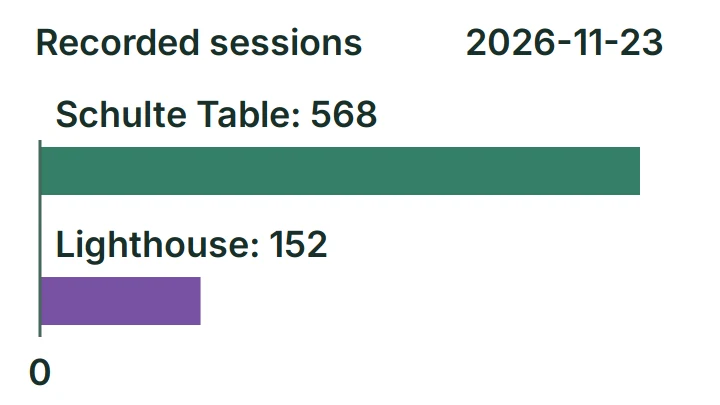
The Cleverini research page counts 568 Schulte Table sessions and 152 Lighthouse sessions. These counts describe site usage. They cannot show which game improves attention or works better (Cleverini research, 2026).
For site context, see the public research and countries pages.
Questions you may still have
- Can you improve attention span? These studies support some task-specific changes, but do not promise lasting gains in everyday attention span. The five habits offer small trials with clear limits.
- Why does my attention fade after a few minutes? Research cannot explain your own pattern yet. They cover phone presence, unfinished work, breaks, task goals, and sleep under specific test conditions.
- How often should I take a break? These studies give no ideal everyday interval. A brief pause when work slips is a practical trial, with limited lab support (Chen et al., 2026).
- Can games improve focus outside the game? The studies cited here do not establish that benefit. Game results and notes about everyday work answer different questions.
- Does the sleep study set my bedtime? The study compared sleep conditions in young adults and measured task lapses. It did not set personal sleep needs or test a bedtime routine.
Sources
-
(Chen et al., 2026). Siyu Chen, Andrea Stocco, Brianna L. Yamasaki. (2026). Maintaining Performance Without Reducing Mind-Wandering: Exploring the Impact of Short Breaks during Sustained Attention Tasks. Center for Open Science. Source.
-
(Barley & Scullin, 2024). Blake Barley, Michael Scullin. (2024). 0178 Cumulative Effects of Mild Sleep Restriction on Lapses of Attention. SLEEP. Source.
-
(Leroy, 2009). Sophie Leroy. (2009). Why is it so hard to do my work? The challenge of attention residue when switching between work tasks. Organizational Behavior and Human Decision Processes. Source.
-
(Ariga & Lleras, 2011). Atsunori Ariga, Alejandro Lleras. (2011). Brief and rare mental “breaks” keep you focused: Deactivation and reactivation of task goals preempt vigilance decrements. Cognition. Source.
-
(Ward et al., 2017). Adrian F. Ward, Kristen Duke, Ayelet Gneezy, Maarten W. Bos. (2017). Brain Drain: The Mere Presence of One’s Own Smartphone Reduces Available Cognitive Capacity. Journal of the Association for Consumer Research. Source.
-
(Cleverini research, 2026). Cleverini research. (2026). Cleverini public research snapshot (2026-11-23T23:14:54Z). Cleverini research. Source.

More from the blog
Why Can't I Focus When Reading? 5 Fixes to Try Today
Reading whole pages without taking them in? Try five small habits to recall the main point, spot gaps, and return to the text.

How to Improve Concentration: A Simple Daily Routine
Learn how to improve concentration with five practical habits for fewer interruptions, clearer task returns, and brief pauses, with evidence explained.

