
Schulte tables practise number search; everyday concentration gains remain unproven.
Schulte Table: How to Use It and What It Trains
Use a Schulte table for a one-minute number-search exercise. Follow a round, compare time and mistakes, and understand why a score cannot prove better everyday focus.
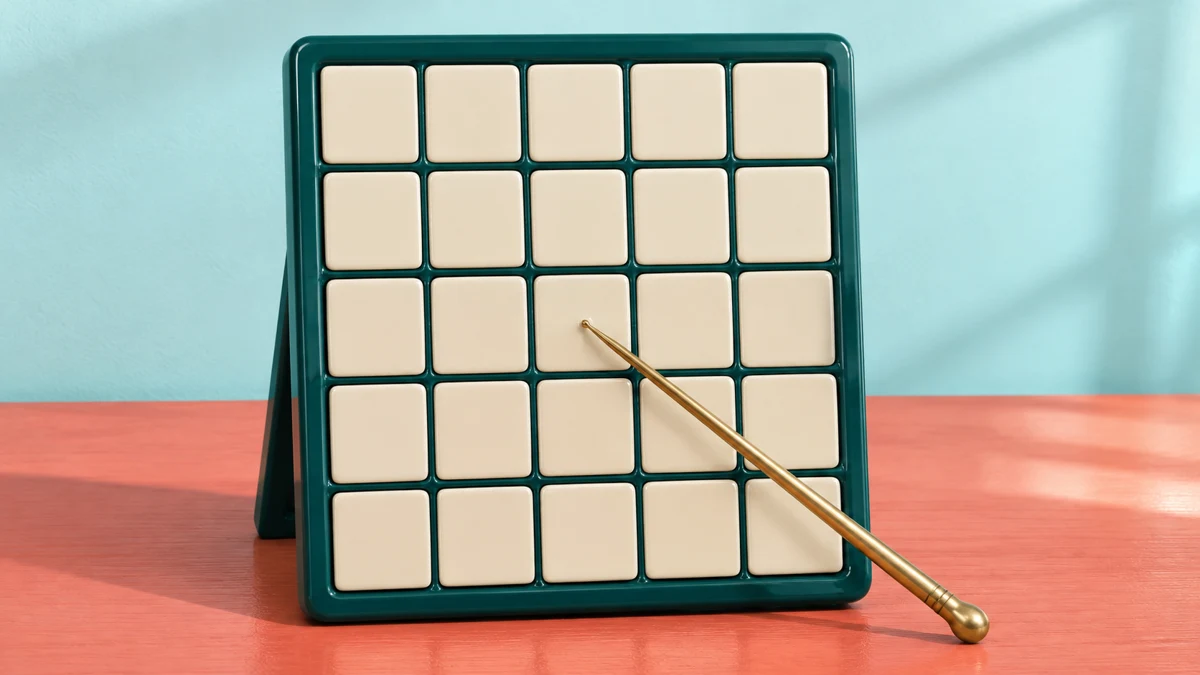
Schulte tables practise number search; everyday concentration gains remain unproven. Finding shuffled numbers in order gives a short exercise a clear beginning and end. A faster game score alone cannot show better focus during work or reading.
For a one-minute break, start with a smaller grid. The Cleverini Schulte Table offers 3×3 and 4×4 boards with fewer places to search than the classic 5×5, which contains 1 to 25.
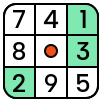 Cleverini Schulte Table
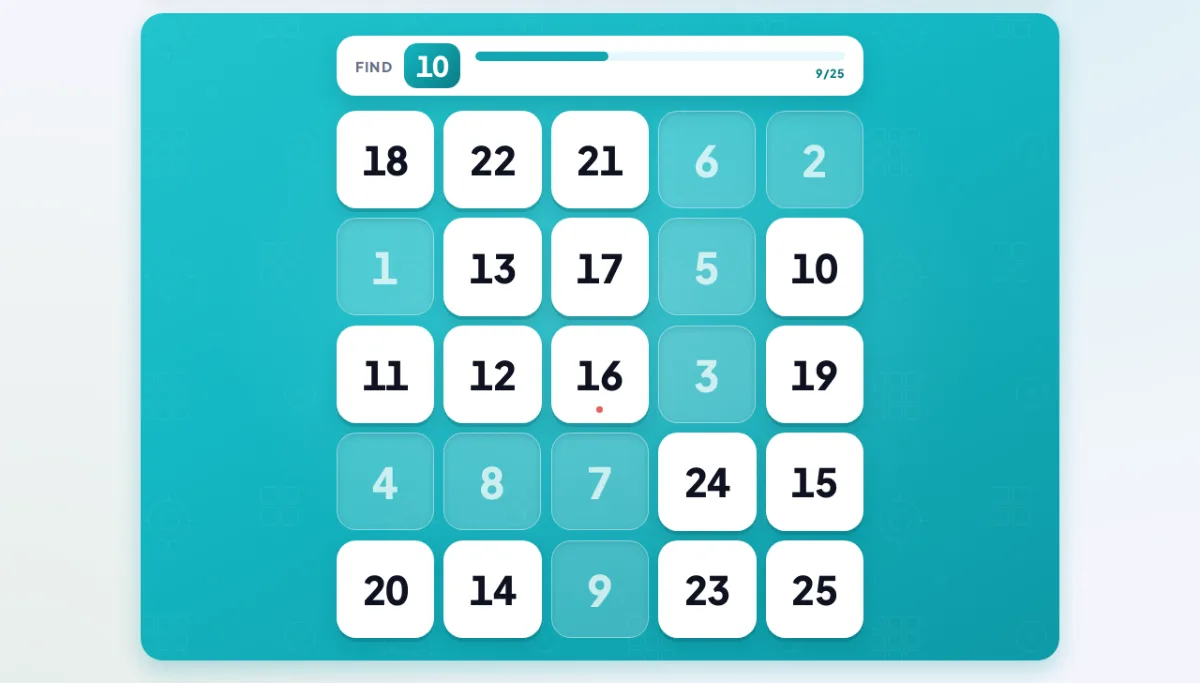 Look at how the shuffled numbers put each next target in a different place.
Follow the next number through the grid
Start begins a countdown. Once it ends, tap 1, 2 and each following number until the last target. The game rules describe the controls and the results shown after a round.
The practice layout below lets you trace the opening before starting. Find 1, then follow the arrows to see where the next targets lie. Reading straight across a row would give the numbers in the wrong order.
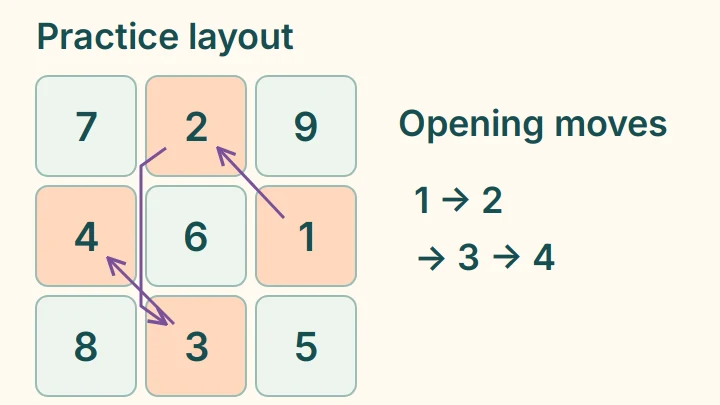
A wrong tap adds to the mistake count without resetting the round. Continue searching for the number you were trying to find. After an interruption, work out which number comes next before tapping again.
Visual search means finding a target among the other numbers. If random glances become hard to track, a steady sweep across the rows gives you a search pattern to follow. Cleverini’s centre dot is an optional reference for your gaze, and its tips suggest using peripheral vision, the view away from the centre of sight, to locate numbers.
At the finish, read mistakes alongside total time. Cleverini reports time to a tenth of a second and pace in numbers per minute. A faster finish with more wrong taps shows a loss of accuracy alongside the gain in speed.
| Comparing attempts | How to use the result |
|---|---|
| ✅ Same grid and controls | Compare time and mistakes |
| 🟠 Changed grid or controls | Keep a separate comparison |
Reading needs its own record
A score combines searching and tapping while you keep your place in the sequence. It cannot separate which action changed between attempts. Switching from a touch screen to a mouse also changes how you select targets.
Check concentration during the activity itself if reading is where focus is difficult. A reading record could track whether a planned passage was completed and how often it was interrupted. The free Attention Practitioner Guide offers further reading on attention practice.

More from the blog
How to Improve Reaction Time: What Helps and What Doesn't
Learn how to improve reaction time with task-specific practice, honest score tracking, and clear evidence about games, age, sport and driving.

How to Keep Your Brain Sharp as You Age: What Helps
Build a mentally active routine with sleep, movement, social contact and enjoyable learning, and see what puzzle and memory-training research shows.

