
To improve reaction time, practise the cue and response involved in the activity, and judge speed alongside mistakes.
How to Improve Reaction Time: What Helps and What Doesn't
Learn how to improve reaction time with task-specific practice, honest score tracking, and clear evidence about games, age, sport and driving.
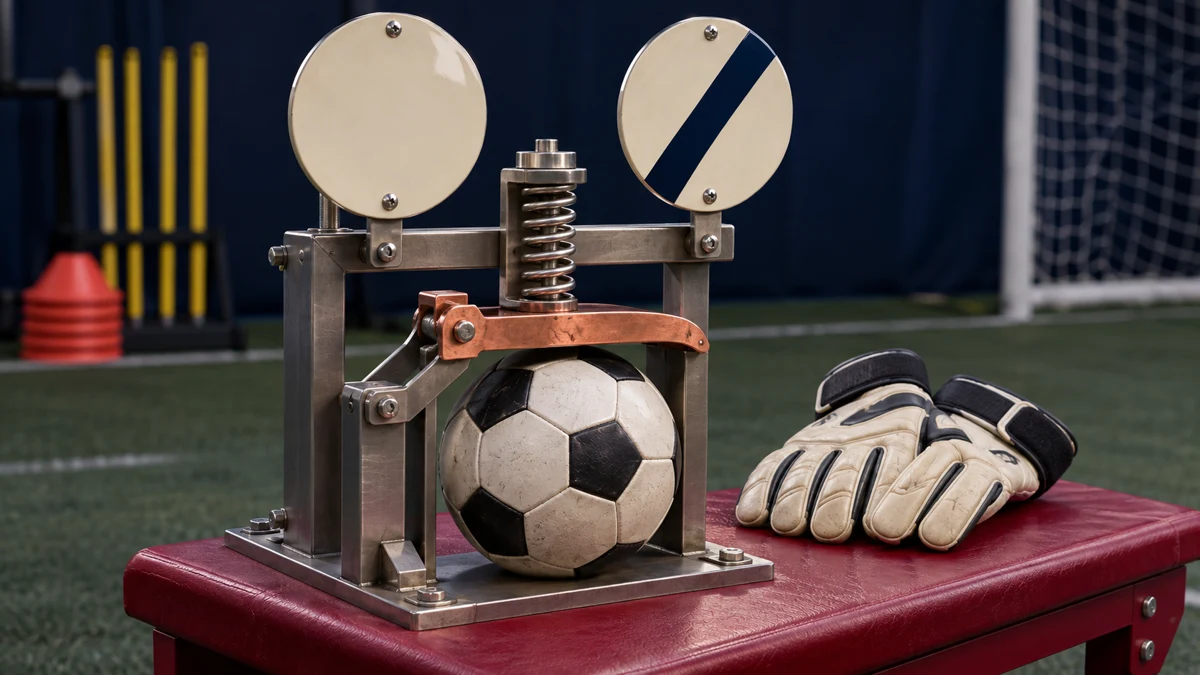
Practise the cue and response involved in the activity when learning how to improve reaction time, and judge speed alongside mistakes. Clicking when a light appears and deciding whether to brake ask different things. A useful practice task makes clear which signal requires action and which signals should pass without a response.
In Cleverini’s Goalkeeper, a quick tap can be an error. Under the normal rule, white balls need a save and sparkling golden balls should pass through. This is a go/no-go task: act on one signal and hold back on another. Tapping before checking the ball skips part of the job.
 Goalkeeper
 Check the ball’s surface and the referee flag before choosing whether to save.
Start by reading the ball correctly. During practice, pay attention to the cue behind each mistake: a white ball passed the line, or a golden ball received an unwanted tap. When the referee raises the flag, the rule reverses. A save that was correct under the earlier rule becomes a mistake under the new one.
A faster score needs an error count
Simple reaction time uses one response. A test that asks for a click whenever a signal appears measures the delay between that signal and the click.
Choice reaction time adds a decision about which response fits. A task that asks for restraint adds another demand. Keep those task names beside the scores so the comparison stays meaningful.
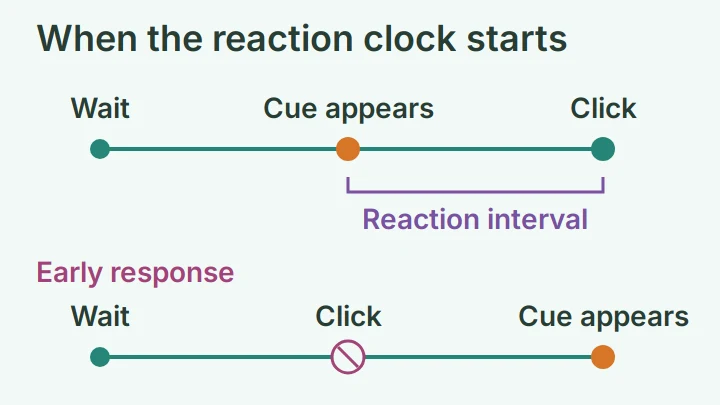
One unusually quick response gives a narrow view of performance. Record the whole attempt, including errors and the average time when the test provides it. Goalkeeper reports both average and fastest saves in milliseconds.
Keep the test setup steady when comparing attempts. Switching between a phone tap and a keyboard press changes the action being measured. Changing the game or its rules changes the task too. A practice record is easier to read when it names the device, controls, rules and level beside the result.
| Record | What it tells you |
|---|---|
| ⏱️ Average response | Speed across responses |
| ⚡ Fastest response | Best single response |
| ❌ Wrong actions | Responses to ignore signals |
| ⚪ Missed targets | Required actions left undone |
For a task that requires choosing, check what caused the delay. In Cleverini’s Colors, the player chooses the shade that covers the most dots. The choice comes before the tap. Comparing two close shades gives a different practice target from pressing a button as soon as anything appears.
 Colors
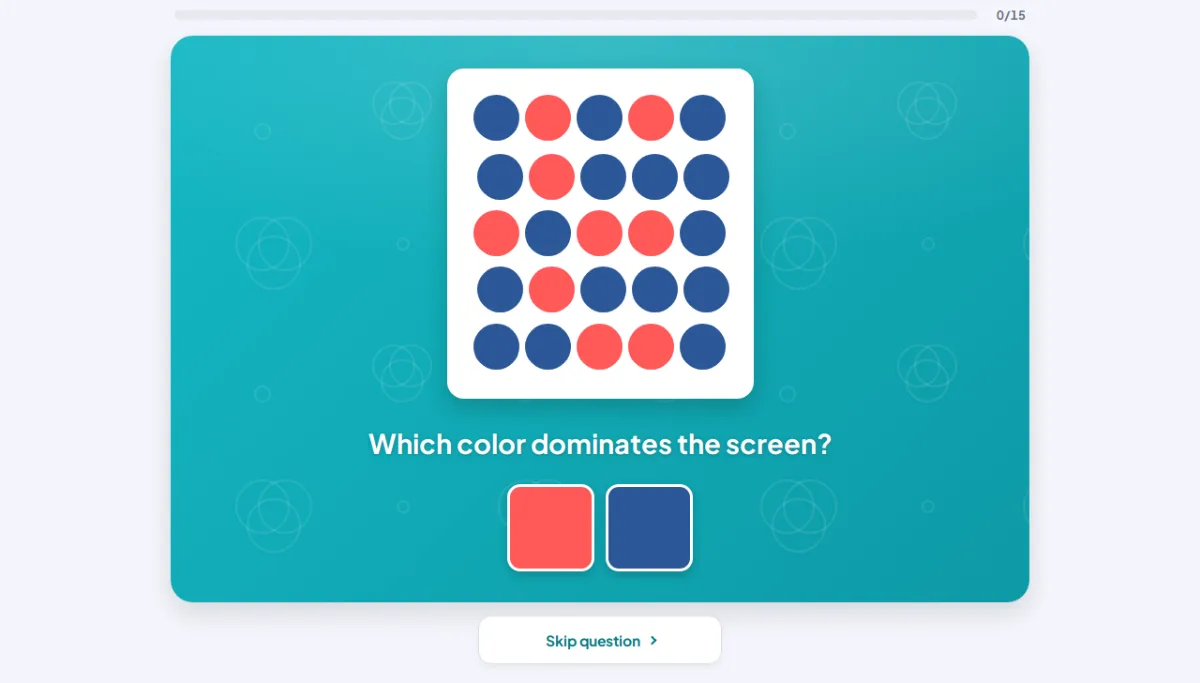 Compare the whole dot field with the answer swatches to find the dominant shade.
What practice and age studies show
Training can improve specific test results. In a study of healthy older adults, people who completed 20 one-hour sessions of non-action video games improved on a choice reaction-time test. The control group showed no change (Ballesteros et al., 2014). This gives evidence for improvement on that test after a structured game course. A lower test time does not establish faster braking or better reactions during sport.
Age comparisons also involve consistency. A review found that adults aged 60 and over had more variation between their own responses than adults aged 20–39 or 40–59. The age differences were larger on choice tasks than on simple tasks. For an older reader checking progress, a record of several responses gives a fuller picture than a single standout click (Dykiert et al., 2012).
Take the question back to the activity
For gamers, match practice to the decision causing trouble. A missed button press and a late target choice need different exercises. Choose a familiar practice setting, keep the controls steady and examine the errors. A faster score with more wrong actions leaves an accuracy problem to address.
Sport practice needs the sporting cue. For a goalkeeper, a drill can ask for a movement in response to the ball’s direction. A separate drill can require choosing whether to move at all. A coach can set those rules and watch which part breaks down. Record the cue and the action taken so the practice note identifies what went wrong.
Remember this
Driving needs room to respond. Leave space ahead and choose a speed that fits the conditions. Reaction-time games belong off the road. A browser result cannot establish whether someone is fit to drive. New difficulty noticing hazards or responding to them deserves a conversation with a clinician.
Sources
-
(Dykiert et al., 2012). Dominika Dykiert, Geoff Der, John M. Starr, Ian J. Deary. (2012). Age Differences in Intra-Individual Variability in Simple and Choice Reaction Time: Systematic Review and Meta-Analysis. PLoS ONE. Source.
-
(Ballesteros et al., 2014). Soledad Ballesteros, Antonio Prieto, Julia Mayas, Pilar Toril, Carmen Pita, Laura Ponce de León, José M. Reales, John Waterworth. (2014). Brain training with non-action video games enhances aspects of cognition in older adults: a randomized controlled trial. Frontiers in Aging Neuroscience. Source.
More from the blog
Schulte Table: How to Use It and What It Trains
Use a Schulte table for a one-minute number-search exercise. Follow a round, compare time and mistakes, and understand why a score cannot prove better everyday focus.
How to Keep Your Brain Sharp as You Age: What Helps
Build a mentally active routine with sleep, movement, social contact and enjoyable learning, and see what puzzle and memory-training research shows.

