
Forgot your shopping list the moment you left the house? Six research-backed habits help you find the route back.
How to Improve Memory: 6 Habits Backed by Research
Learn how to improve memory with recall practice, checking, and spaced reviews. Try six practical habits and a simple routine for today.

How to improve memory with a route back
If you wonder how to improve memory while forgetting your shopping list, start with a small change. Try recalling the items before looking, then check what you missed. Looking again feels easy because the answers are there.
An attempt shows which items you can bring back without help. This is retrieval practice: trying to remember, then checking your answer. Dunlosky and colleagues rate practice testing highly in their review of learning techniques.
Think of remembering as finding a route back to information. Your shopping list is the destination; recalling it with the paper hidden means finding your way there yourself.

An attempted journey shows where the route becomes hard to follow.
Checking the list shows where you took a wrong turn. Returning later gives you another chance to find the route after a break. Those two moves shape the practice that follows.
Start with an attempt and a check
Take a sample shopping list: milk, bread, beans, and apples. Read it carefully. Then turn it over and say or write what you remember before you peek.
Now compare your attempt with the list. Perhaps you missed apples and added eggs. Mark both changes so you know what to work on.

Turn the list over, make an attempt, then compare.
This gives you the first two habits: retrieve before looking, then check and correct. They belong together. The review author's practice guide recommends attempting answers, checking them, and practising again.
Give the missed item some attention, then hide the list again. Try bringing it back once more, along with the items you already recalled. Keep the original nearby for checking.
A rough note is enough. You can cross out an extra item or add one you missed. What matters is having an answer you can compare with the source.
The same approach works as a practice task with meeting notes or homework. Keep the question clear. For a short message, you might ask what the sender wants you to do.
That question gives your attempt a focus. Once you have checked the answer, save the message or note for another session. The next habit is about when you return.
Give the next attempt some space
The third habit is return after a gap. Revisit what you learned in a later session. The review also rates this approach, called distributed practice, highly for learning.
For a work example, suppose you are learning the key points of a presentation. Make an attempt today, then put another attempt on a later day's calendar. Choose a time that fits your life.
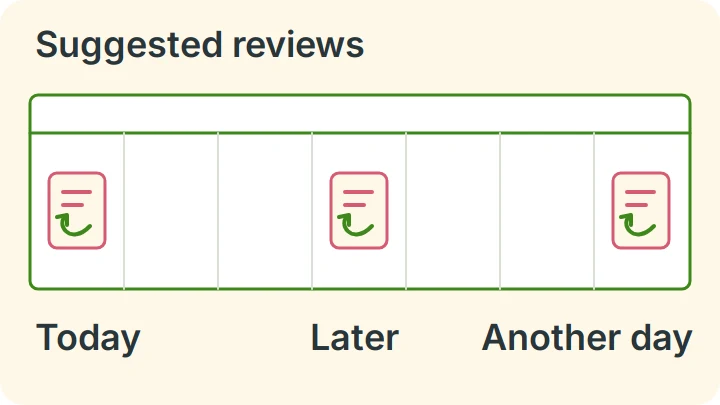
Suggested review days give each new attempt a place on the calendar.
Leave yourself a clear task for that return. A calendar entry such as “recall the three presentation points” tells you how to begin when you return.
At the next session, start with a blank page. Write the points you can recall, then open your notes. Give the parts that slipped away another attempt after checking them.
Remember this
Keep the original note available for checking. Put the next review somewhere you already look, such as your calendar.
Consider the meaning too. For your presentation, you need to explain each point and how it fits the topic you plan to discuss.
Make the idea fit something you know
Habits four and five help with that work: explain why, then connect to existing knowledge. Ask why a new fact or rule makes sense. Then explain how it fits something familiar.
Here is a workplace illustration. You learn a new rule: save the final file in the team folder. Ask why that rule exists before trying to remember its wording.
In this example, everyone needs to find the same final copy. You already know where drafts belong. Explain how the new rule fits the way your team keeps its files.
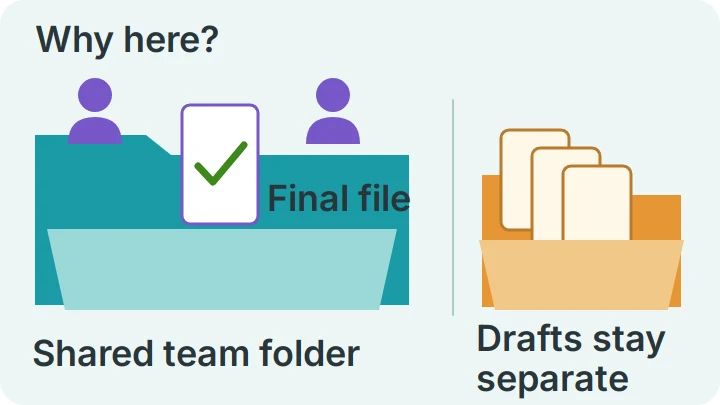
The file rule links a shared final copy with a familiar draft routine.
Your explanation might be short: drafts stay in your working folder; final copies go where everyone can find them. Check that account against the actual rule. Add any detail you left out.
The review gives moderate ratings to asking why and explaining ideas to yourself. Start with recall practice and spacing, which it rates more highly. Add these questions when you have an idea to explain.
For a page of notes, close the page and explain its main point aloud. Reopen it to check your account. Once you can handle each idea, you can vary the questions you practise.
Mix related questions
The sixth habit is mix related question types. Choose related tasks that you can already attempt, then move between them during practice. Keep one question in front of you at a time.
For illustration, a language worksheet might mix questions about word order and verb endings. Read each question and decide what it asks you to do. Explain your choice, then check your answer.
The review gives this mixing approach, called interleaving, a moderate rating. Use it where you have related question types to work through. A short set gives you room to check each attempt before moving on.
When recall gets stuck
Any of these tasks can leave you staring at a blank page. Start by making the task smaller. If you cannot recall a whole page, ask for its main point.
Still stuck? Check one part and try explaining it again. Use a small clue, such as a topic heading, while keeping the answer covered.
Then attempt the answer and check it. Once you have worked through that part, try the full question again.
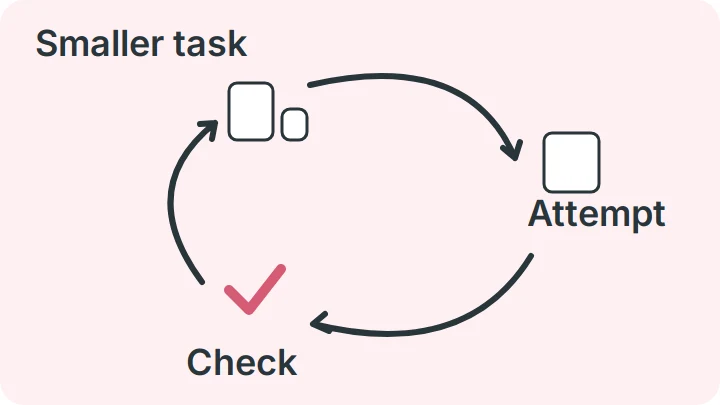
When stuck, shrink the task and keep the attempt and check together.
Keep track of the part that caused trouble. For example, mark the heading beside a point you missed in your presentation notes. That gives you a place to start at the next review.
Use games for a specific kind of practice
You can also choose a game when you want a defined memory task. In Word List, you study words, then select previously shown words among other choices. A timer runs, and lists grow with the level.
 Word List
Town Folk asks you to learn characters' names and jobs, then answer questions with four choices. Earlier characters appear again during play. Notice which names or jobs you confuse.
 Town Folk
The memory games page describes Twin Cards as remembering card positions and revealing pairs. You can choose it when you want to practise that specific task. Each game gives you a different thing to remember.
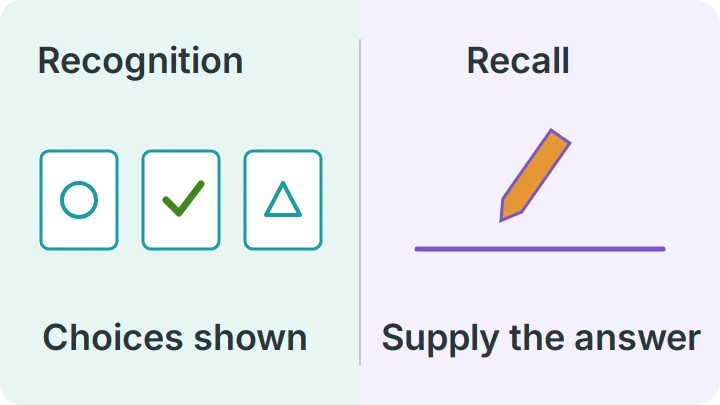
Choosing a shown answer and producing an answer ask different things of you.
Word List involves recognizing words among choices. Recalling your shopping list with the paper hidden asks you to produce the words yourself. Choose your task with that difference in mind.
For practice producing an answer, use the notes you saved earlier. Hide them and explain a point in your own words. The task you choose determines what you get to practise.
What the research supports
The evidence concerns studied information; remembering future actions, such as collecting a parcel, remains a separate need. Keep an external reminder for those jobs. The route is an analogy for practice.
The six habits use five techniques, with checking part of retrieval practice. The author's guide explains the review's evidence base. These sources establish neither a guaranteed improvement deadline nor an ideal daily dose.
Publisher descriptions provide no independent evidence that game scores show wider memory gains or offer a formal assessment. In-game revisits do not establish retention across days. Twin Cards verification covers the category listing only.
One action for today
Choose one short note you want to learn, with a question you can answer from it. That could be the main point of a page or the key points of a presentation. Use this sequence:
Keep the note and your attempt together. At the next session, you will have a clear question and a source ready for checking. Begin with the note hidden.
FAQ
How can I memorize better?
Try recalling the material before looking at it again. Check what you got right and correct what you missed. Return in a later session, starting with another attempt from memory.
How can I improve memory fast?
Start now with one short note: hide it, recall it, and check it. Focus your next attempt on something you missed. This gives you a practice action you can use today.
How can I improve memory and recall?
Practise producing answers while your notes are hidden, then check them. Return after a gap. Include questions where you supply the answer yourself, alongside any practice with displayed choices.
What are the most useful memory improvement tips?
Start with recall attempts, checking, and later reviews. These use the two approaches rated most highly in the review. Add explanations, familiar connections, and mixed related questions when they fit the material.
How can I improve memory daily?
Choose something you studied earlier, attempt it from memory, and check your answer. Give the parts you missed another attempt. Plan when you will return to that material.
Sources
- Dunlosky and colleagues: Improving Students' Learning With Effective Learning Techniques. Review and technique ratings.
- John Dunlosky: Strengthening the Student Toolbox. Practical guidance from the review's lead author.
- Word List, Town Folk, and memory games. Publisher descriptions of game tasks.

More from the blog
Memory Games for Seniors: Free, Simple, No Download
Explore free memory games for seniors, with simple ways to play together, offer hints, and keep expectations grounded in evidence.
How to Memorize Fast: 5 Methods That Work for Exams
Learn how to memorize fast with five study habits: recall, practice questions, word retrieval, spaced reviews, and a later self-test.

