
Keep the next match within reach of your biggest tile.
2048 Strategy: How to Merge Higher Without Getting Stuck
2048 strategy for stalled boards: keep matches reachable, protect useful space, and plan Number Drop moves with the NEXT preview.
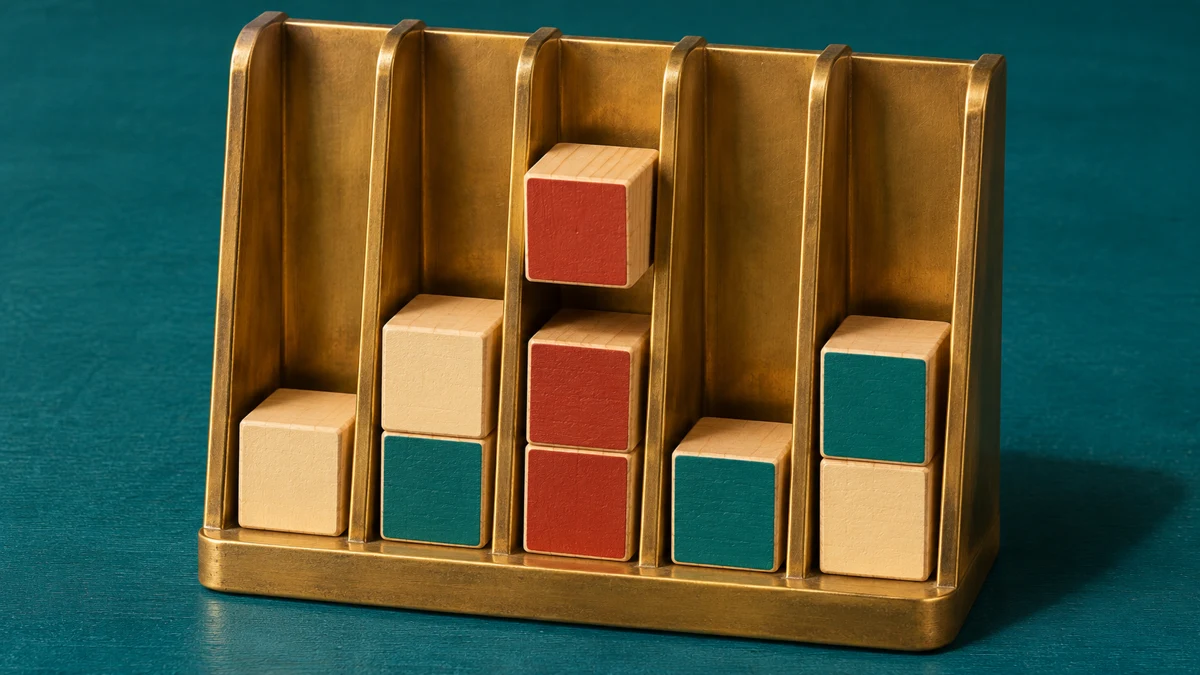
Keep the next match within reach of your biggest tile. Build smaller matches near that tile, with enough space for the next pair to meet. A higher number becomes hard to use when small tiles fill the route to it.
Plan the merge after the merge. In a column-drop game, an 8 dropped onto another 8 makes 16. If that new 16 touches a 16 below it, the chain reaches 32. Before choosing that column, check whether the matching blocks will actually touch.
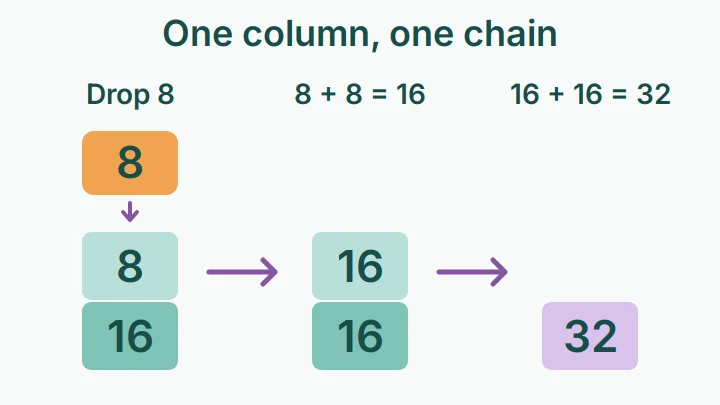
Stack order decides whether the chain starts. With an 8 below a 16, an incoming 8 stops on the 16 and cannot reach its match. Trace where the block lands before counting the value the move could produce.
The controls change how to build. In classic swipe 2048, a move shifts tiles across the board, so a tempting merge can also move the largest tile away from its corner. In a drop game, the choice is the landing column. Number Drop uses five columns, touching equal blocks, and a NEXT preview. Advice about swipe directions needs translating into column choices there.
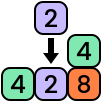 Number Drop
| Board clue | Check before moving | Avoid |
|---|---|---|
| 🧱 Largest tile in corner | Nearest matching value | Small tiles between them |
| ↔️ Equal swipe tiles | Every tile’s destination | Losing the corner |
| ⬇️ Incoming drop | Lowest free spot | Covering a needed match |
| 👀 Previewed block | Its next landing | Filling its only column |
When the same high tile becomes a dead end
Build toward the missing partner. Beside a 128, another 128 is the next useful match. That partner needs two 64s, and each 64 needs two 32s. Work backward only far enough to choose the next move. A small merge elsewhere deserves less attention when it leaves those needed pairs farther apart.
Keep the large values connected. In swipe 2048, a descending edge such as 128, 64, 32, 16 gives nearby values an order to build through. Before swiping away from the chosen corner, check where the largest tile will stop and whether another move can bring a match beside it.
Empty cells preserve useful choices. A board with space can accept moves that separate small tiles or bring matching values together. When space gets tight, look for a merge that frees a cell near the pair being built. An isolated pair may raise the score while leaving the crowded part of the board untouched.
Check the result of each direction. Repeating a favourite pair of swipe directions saves thought until a move would pull apart the arrangement being built. At that point, compare where each direction leaves the largest tile and how much room remains around its next match.
Drop games make the landing spot decisive
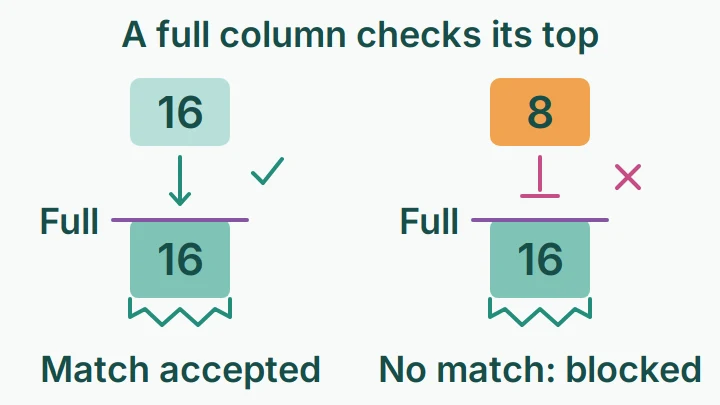
The top block controls a full column. In Number Drop, a full column accepts a new block only when it matches the top block. A large value buried lower down cannot help an incoming block enter. Near the top of the board, check the exposed numbers across the columns before choosing where to stack.
A landing can close future choices. Adding an unmatched block to a nearly full column uses space without making a merge. That placement needs a reason, such as keeping a different column available for the previewed block. When another column offers a matching top, compare the board each choice leaves behind.
Read NEXT before choosing the column. Find a legal landing for the current block, then identify where the preview would go afterward. If both blocks need the same crowded column, trace whether the first drop clears room or puts a different number on top.
The level goal can change that choice. Number Drop limits the drops available for each level. Some goals ask for a target number or a set count of merges. To bring every column below a goal line, compare their height after each possible merge. For a target number, follow the chain that reaches the required value.
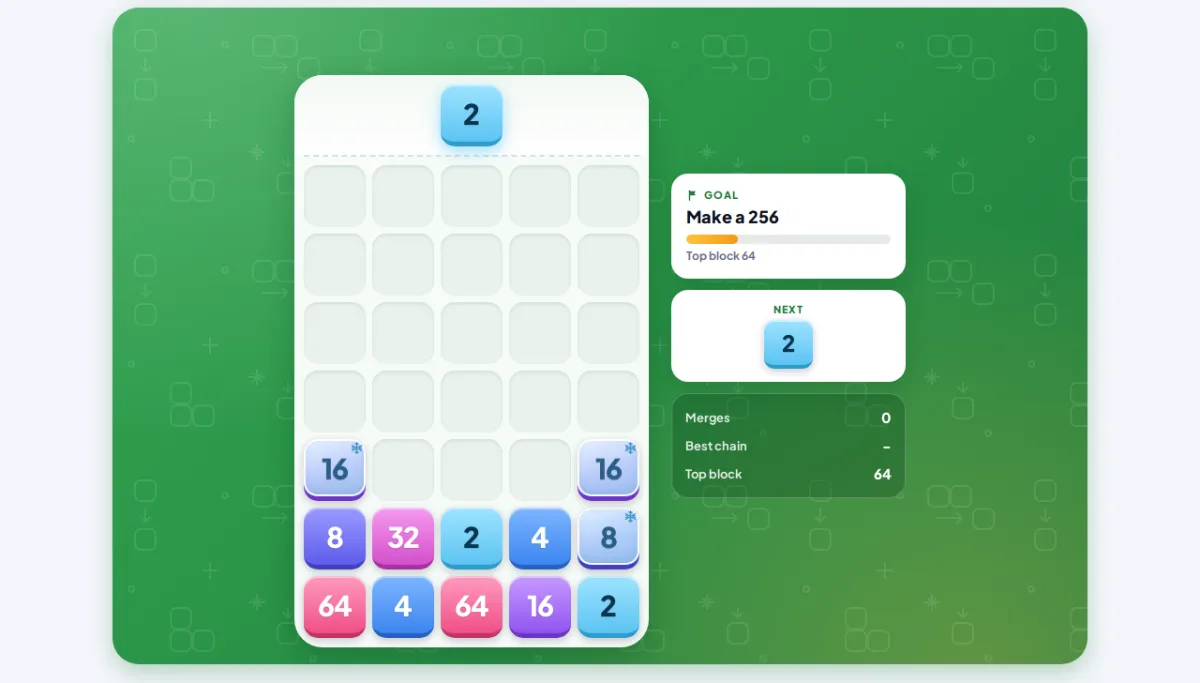 Compare the exposed top blocks before choosing a landing column.
Use a corner column as the anchor. Keeping the largest block near an edge concentrates the building work on one side. Leave nearby columns available for the smaller matches that feed it. A high block surrounded by unrelated values is a warning to check access before adding another layer.
Review the move that removed a choice. After a stalled run, look for the earlier placement that covered a needed match or filled a useful column. That gives the next attempt a specific change to test. The final blocked move often leaves too little room to repair what happened earlier.

More from the blog
How to play Sudoku: Rules for Your First Grid
Learn how to play sudoku with the basic rules, a worked first move, pencil marks and a clear guide to rows, columns and boxes.

Why Jigsaw Puzzles Are Good for Your Brain (Honestly)
Jigsaws use visual and spatial skills. See what a study of adults over 50 found, what each piece asks of you, and how to choose a puzzle for enjoyment.

