
Each miss gives you two card locations to use later.
Memory Card Game Rules and 4 Tips to Find Pairs
Learn memory card game rules, four tips for finding pairs, and simple house rules for playing alone or with family.
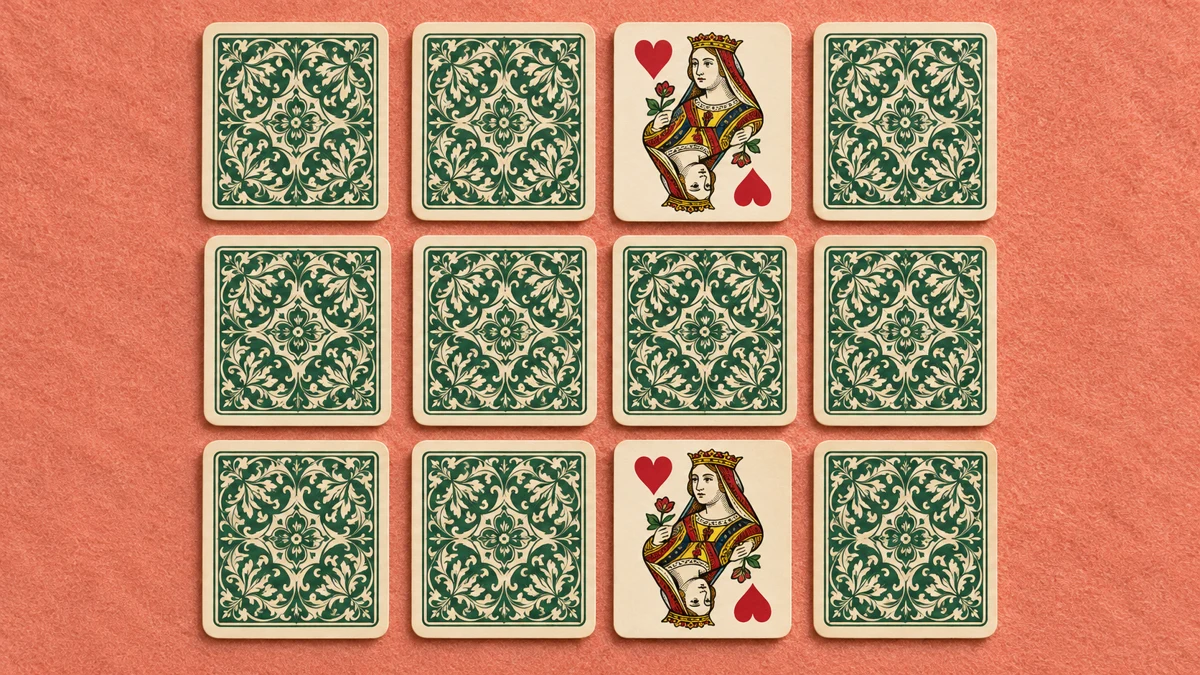
Each miss gives you two card locations to use later. Under the memory card game rules, matching cards stay face up or leave the board.
A miss means both cards go face down again. Remember their places for a later turn. The round ends when every pair has been found.
A twin has the same rank and suit: two queens of hearts match. A five of spades and a five of clubs do not. Game rules
 Game rules
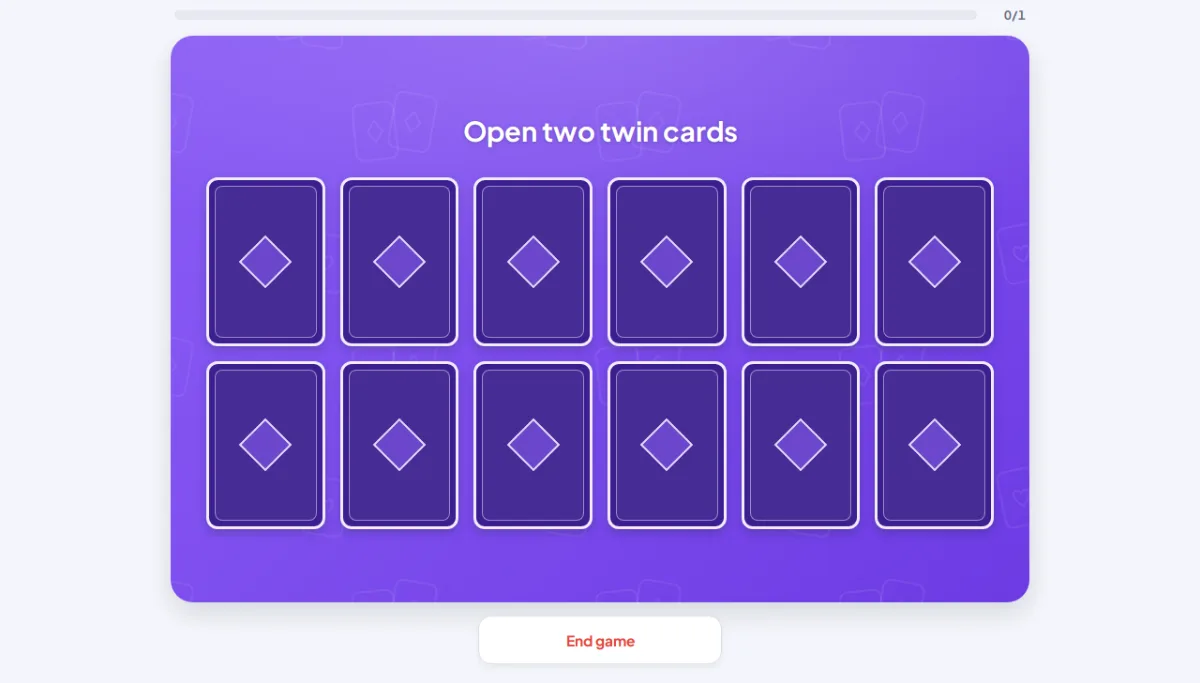 Check each revealed card’s suit and rank.
Four tips for finding the next pair
1. Choose a few preview pairs. During the brief look at the board, pick pairs whose positions are easy to name. Two matching cards at opposite ends of a row give you specific places to return to. Leave the other pairs for later turns if the whole board is too much to remember.
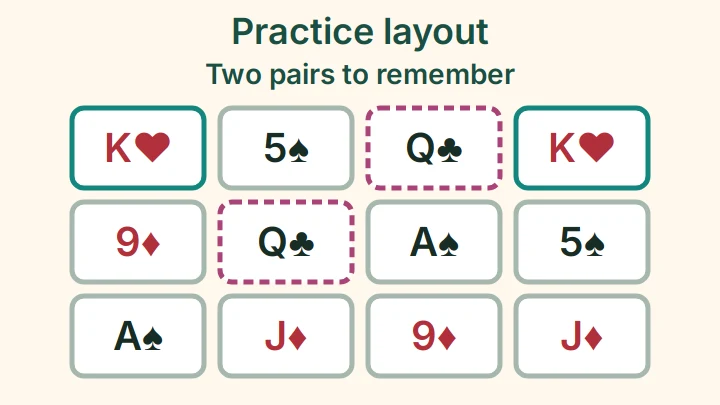
2. Give each card a place. A short phrase such as top left, king of hearts joins the card’s identity to its position. On a larger board, count rows from top to bottom and cards from left to right. Row two, card one still points to one place after nearby pairs have been removed.
3. Remember both cards after a miss. Keep track of what each card was and where it sits. Either one could be the partner of a card revealed later. In family play, watch the cards other players turn over too, since those reveals can help on your turn.
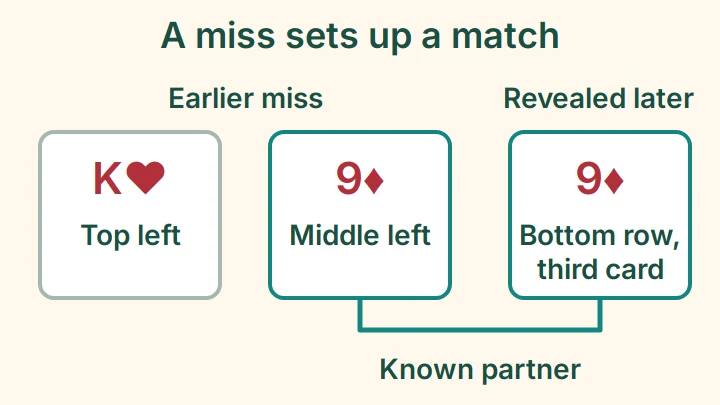
4. Start from a known card. When both halves of a pair are remembered, open them together. When only one card’s position is certain, opening it first gives you a specific card to search for. Choose an unseen position for that search if the twin’s location is still unknown.
Set the table rules before shuffling
A single deck needs an agreed match. Ordinary playing cards contain one card of each rank and suit, so exact twins require duplicates. For a home game with one deck, use a house rule such as same rank makes a pair. Choose two cards of each selected rank and set the others aside before shuffling.
| Version | ✅ A pair | ❌ No match |
|---|---|---|
| Twin Cards | Same rank and suit | Same rank, different suit |
| Home rank-only rule | Same rank | Different ranks |
Lay the cards in steady rows, face down, with enough space to turn each one without moving its neighbours. Fewer pairs give you fewer positions to remember. A home game can also begin with a face-up look if everyone agrees before play starts.
For a shared game, agree on who plays next. One house rule lets a player keep a matching pair and take another turn. After a miss, the next player takes over once both cards are face down. Keep collected pairs beside each player so they can be counted when the board is empty.
Remember this
The most pairs wins this house version. Equal pair counts make a tie. Agree before play whether a tied round will simply stay tied.
Playing alone or sharing the board
Solo play needs no turn order. Clear the board and keep a tally of misses if you want a record of the round. With physical cards, pause after a miss while both cards are still visible, and name their places before turning them down.
With children, adults or older relatives, agree on help before play starts. A teaching round can allow spoken position reminders. A competitive round can keep those reminders private. Decide whether everyone gets a preview and whether matched cards stay open or are removed.
The browser game handles the flips in Twin Cards, with six pairs and a short opening preview. For reading about remembering information beyond a card board, the free Memory Practitioner Guide covers that separate topic.

More from the blog

How to Remember Where You Put Things (Keys Too)
Learn how to remember where you put things with exact location cues, a search from your last confirmed use, and a fixed home for everyday items.

How to Improve Working Memory: Everyday Tips That Help
Learn how to improve working memory with clear task prompts, brief recall practice, and optional games, with evidence limits explained.

