
Losing your place in a task—want five practical habits for tracking steps and practicing recall?
How to Improve Working Memory: Everyday Tips That Help
Learn how to improve working memory with clear task prompts, brief recall practice, and optional games, with evidence limits explained.

You open your bag, see the lunch box, and forget whether you packed the signed form. Back at the counter, you start the whole check again. If you want to know how to improve working memory, that small lost thread is a useful place to begin.
The same problem can show up in a shop or halfway through a work request. What needs to stay in mind: your next action, a growing list, or facts you want to learn? Each calls for a slightly different approach.
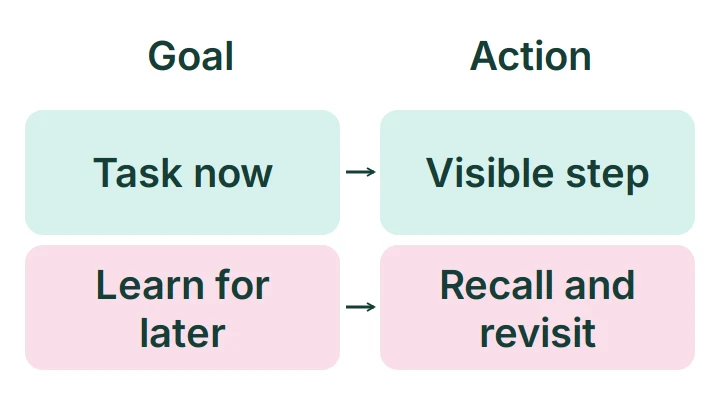
The first two habits focus on tracking the task in front of you. The next two concern learning for later; the fifth puts game practice in context. Each science check states the strength and limits of its evidence.
5 habits for lists and multi-step tasks
A useful note names an action you can see yourself doing. “Finish school stuff” leaves plenty to work out; “Pack the signed form” gives you a starting point. Try the same approach at work: “Open the draft and check the date” (Frankenmolen et al., 2018).
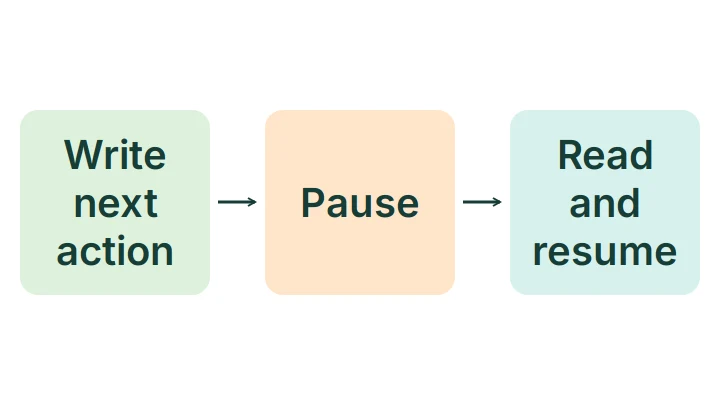
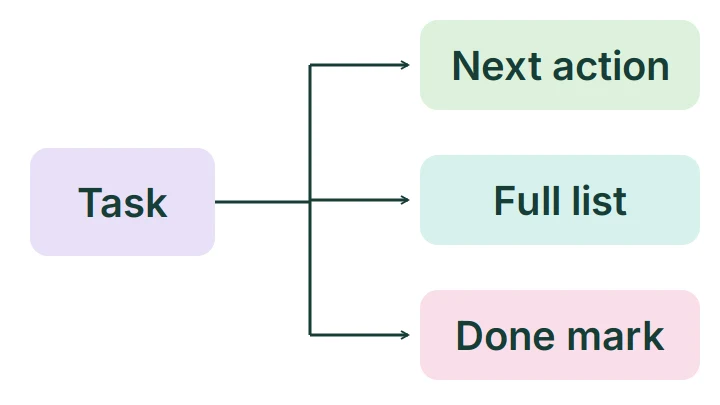
For example, your notes might explain how to send a completed form. Can you recall who gets it and which file to attach? Use those questions for a short check, then compare your answers with the instructions (Roediger & Karpicke, 2006).
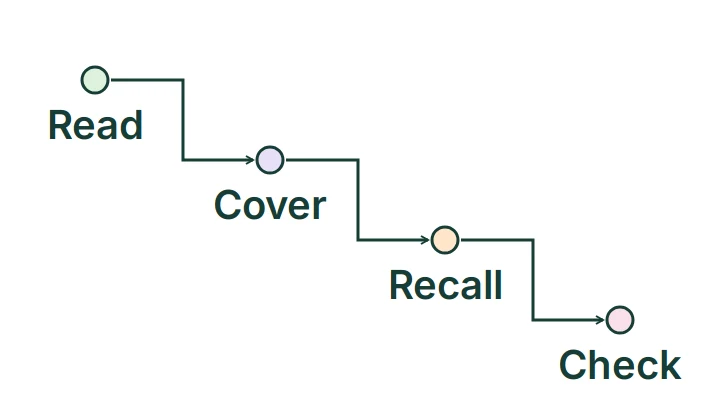
For the form task, a later recall question could be “Which file goes with this request?” Keep the approved instructions ready so you can check your answer (Alakbarova & Ball, 2023). The aim here is to learn information for later use.
Two working memory games offer different rules to follow:
| Game | What you keep track of | What changes |
|---|---|---|
| Fresh Pick | Items already picked; the basket shows only a count. | The stall reshuffles and adds an item each round. |
| Echo Match | Whether a card matches the one one or two places back. | After 25 seconds, the rule switches to two-back; the run lasts one minute. |
 Fresh Pick
 Echo Match
Fresh Pick asks you to maintain a growing list despite changes in position. Echo Match asks you to replace older symbols as new ones arrive. Both run free in your browser, with no download.
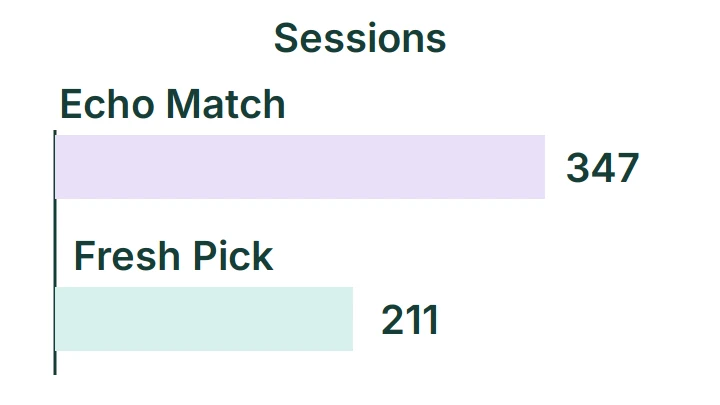
The Cleverini research page counts sessions played. Echo Match had 347 sessions; Fresh Pick had 211. These counts show what people played, not whether it improved their memory (Cleverini research, 2026).
Back at the bag, the useful outcome is simple: did the signed form get packed? This table brings each option back to the kind of task it serves.
| Technique | Action to try | Evidence boundary |
|---|---|---|
| Next-step note | Write where to resume. | Part of a practical strategy approach; the trial tested a whole program (Frankenmolen et al., 2018). |
| Recall check | Cover notes and explain a short section. | Controlled prose-learning experiments (Roediger & Karpicke, 2006). |
| Later recall | Revisit the same material in another session. | Vocabulary experiments reported in a preprint (Alakbarova & Ball, 2023). |
| Game practice | Track the rule and your own errors. | Structured training evidence does not validate these games (Lampit et al., 2014). |
Quick tip · Remember this
Quick tip: When you lose your place, return to the last checked step and read the next action (Frankenmolen et al., 2018).
Common questions
- What is working memory? It is keeping information in mind while using or updating it, such as tracking your latest picks.
- Can working-memory games improve everyday memory? These studies do not establish that these browser games improve daily tasks; judge your real task separately (Xin et al., 2014).
- What can I try for a multi-step task? Write the next action, keep the full list visible, and mark each finished step (Frankenmolen et al., 2018).
- How can I practice recall briefly? Cover a short section, explain its main points, then check the original for gaps (Roediger & Karpicke, 2006).
- What if I keep losing my place? Return to the last checked step, make the next action smaller, and leave a clear prompt (Frankenmolen et al., 2018).
Today, choose one task and write its next action before you begin (Frankenmolen et al., 2018).
Sources
-
(Xin et al., 2014). Zhao Xin, Zhou‐Ren Lai, Fu. Li, Joseph H. R. Maes. (2014). Near‐ and Far‐Transfer Effects of Working Memory Updating Training in Elderly Adults. Applied Cognitive Psychology. Source.
-
(Frankenmolen et al., 2018). Nikita L. Frankenmolen, Eduard J. Overdorp, Luciano Fasotti, Jurgen A.H.R. Claassen, Roy P.C. Kessels, Joukje M. Oosterman. (2018). Memory Strategy Training in Older Adults with Subjective Memory Complaints: A Randomized Controlled Trial. Journal of the International Neuropsychological Society. Source.
-
(Lampit et al., 2014). Amit Lampit, Harry Hallock, Michael Valenzuela. (2014). Computerized Cognitive Training in Cognitively Healthy Older Adults: A Systematic Review and Meta-Analysis of Effect Modifiers. PLoS Medicine. Source.
-
(Roediger & Karpicke, 2006). Henry L. Roediger, Jeffrey D. Karpicke. (2006). Test-Enhanced Learning. Psychological Science. Source.
-
(Alakbarova & Ball, 2023). Durna Alakbarova, Hunter Ball. (2023). Spaced Retrieval Improves Retention and Transfer of Foreign Vocabulary. Center for Open Science. Source.
-
(Cleverini research, 2026). Cleverini research. (2026). Cleverini public research snapshot (2026-11-23T22:12:15Z). Cleverini research. Source.

More from the blog
Memory Games for Seniors: Free, Simple, No Download
Explore free memory games for seniors, with simple ways to play together, offer hints, and keep expectations grounded in evidence.
How to Memorize Fast: 5 Methods That Work for Exams
Learn how to memorize fast with five study habits: recall, practice questions, word retrieval, spaced reviews, and a later self-test.

