
Keep a short sequence by grouping it yourself
A string of items can become easier to describe when you choose useful groups. Test how your grouping works, including where it can quietly change the order.
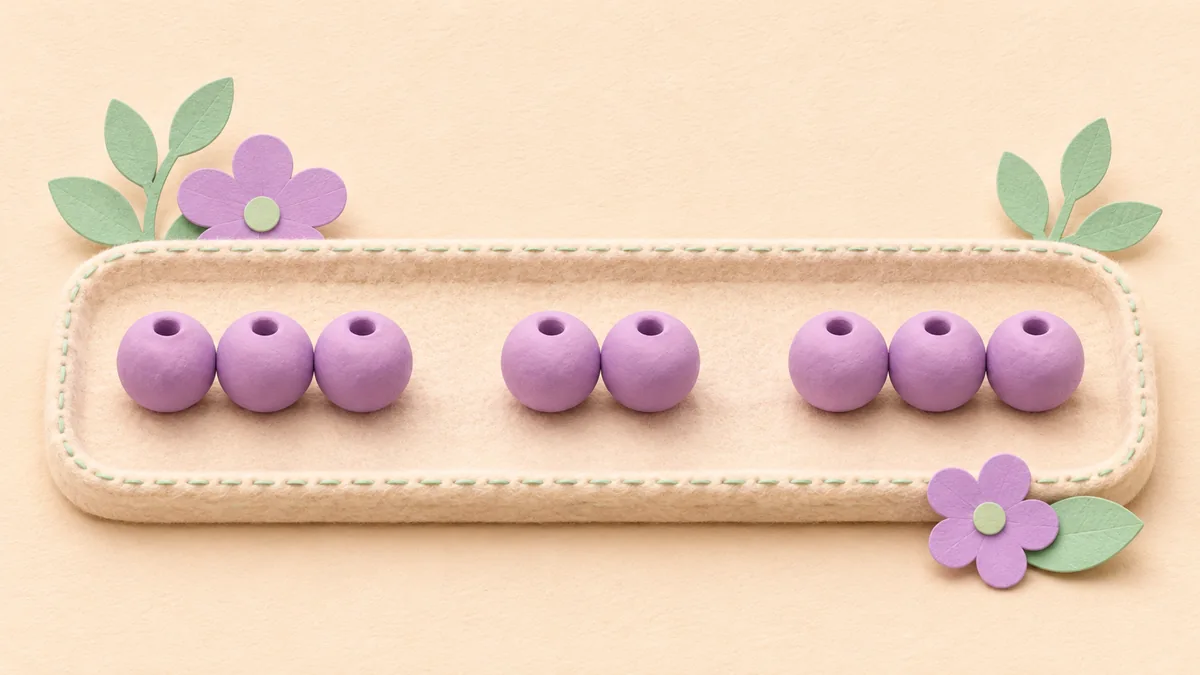
Consider the sequence cup, spoon, plate, sock, shoe, hat. You could repeat six separate words. You could also describe two groups: things on a table, then things you wear. The second description gives the sequence a structure, but it introduces a new question: will you remember the order within each group?
Grouping is useful to test because it can both organize and distort what you are trying to keep. The aim is not to discover a magic number of items that everyone can hold. It is to find a meaningful structure that still preserves the information the task needs.
Start with material you can check
Write six familiar words on paper and give yourself a brief look. Cover them, write the sequence from memory, then compare it with the original. Choose your own everyday words rather than assuming that an example list describes what a Cleverini game will contain.
On a second list of similar length, deliberately choose groups. You might use meaning, sound, or a simple story. State the groups once, then try to recall the exact sequence. Record what changed: missing items, switched positions, or a confidently remembered word that was never there.
Give each group a boundary
A group is not very useful if you cannot tell where it ends. In the table-and-clothing example, the boundary follows the plate. For a number sequence, you might choose pairs and leave a small spoken pause between them. For a route, a doorway could mark the end of one section.
These boundaries are choices, not rules that the game automatically supplies. Check that they match the task. If you must recall items in their original order, rearranging them into more convenient categories changes the problem. A tidy summary is not the same as an accurate sequence.
Try it with order practice
Word Order offers a setting where sequence matters. First learn the game's instructions. Then, for a short session, notice whether you naturally make groups and whether those groups keep the required order. Do not add a complicated story if the available time makes the story harder to remember than the items.
- If items disappear: try smaller groups or more familiar connections.
- If groups swap places: add an order cue between the groups.
- If items within a group swap: make their internal order explicit.
- If you add an item: check whether your story is replacing the original material.
Do not let a clever explanation hide a miss
It can feel satisfying to invent an elaborate connection. That feeling is not the result you need to check. Cover the source and try to retrieve the actual information. A grouping method earns its place when it helps you give the required answer, not when it sounds memorable while you are still looking at the list.
Keep your review factual. “I remembered all six words but reversed the first pair” points to an order problem. “The story was funny” tells you something about the experience, but little about whether it preserved the sequence.
Choose one real use
Try grouping a short set of instructions you actually need, such as the order of steps for preparing a room. Keep safety-critical instructions written down and follow their official procedure; this exercise is not a reason to remove a useful checklist. For an ordinary low-stakes task, see whether your groups help you explain the sequence afterward.
Finish by keeping the simplest structure that worked. Sometimes that will be a meaningful group. Sometimes it will be ordinary repetition with a written reminder. The useful habit is checking what you can reproduce, rather than judging a method only by how convincing it felt.

More from the blog
Remember positions by describing relationships
Instead of treating every location as an isolated spot, try describing what sits beside, above, or between other items. Then check that your description preserves the layout.
Switch rules by saying what changed
A rule change is easier to examine when you can state the old instruction and the new one. Try a brief transition phrase instead of carrying the previous answer forward.

