
Seven columns of cards look confusing? Follow one red 6 through a deal and the Klondike rules get easier to see.
How to Play Solitaire: Klondike Rules and Winning Tips
Learn how to play solitaire with clear Klondike rules, five practical habits, and a simple scan to use when your game gets stuck.
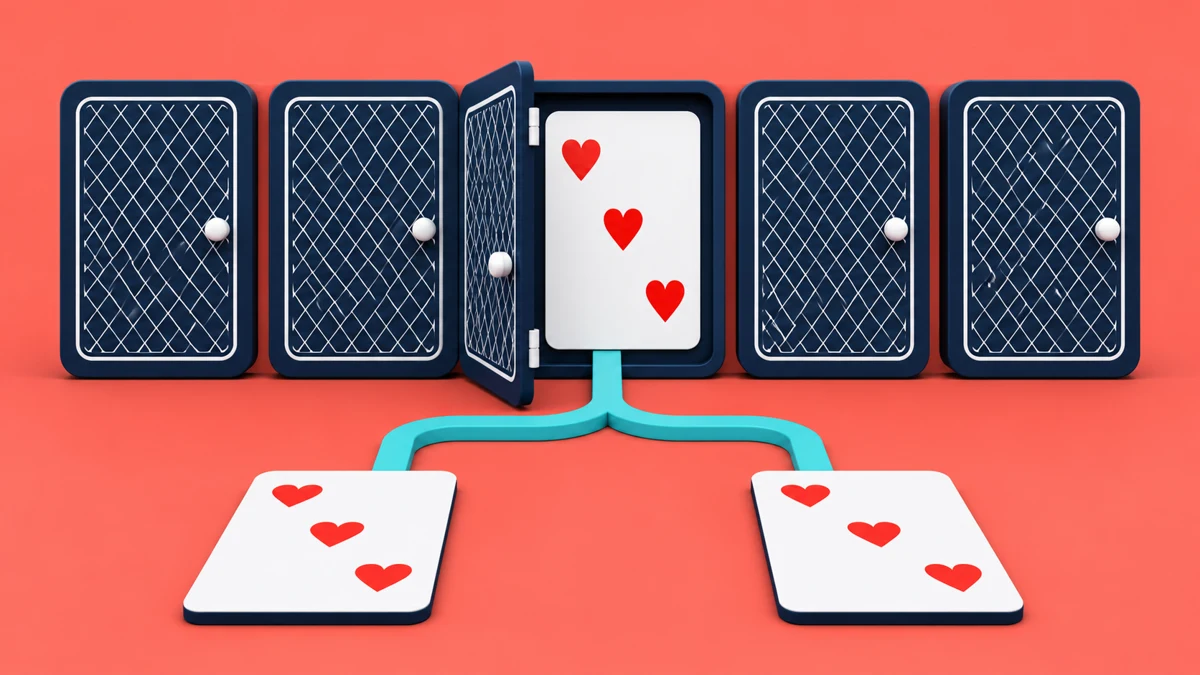
You want to know how to play solitaire, but seven columns of cards look confusing. In Klondike, those columns give you room to sort cards and reveal hidden ones. The goal is to finish four suit piles, each from Ace to King.
A red 6 makes the rules easier to see. Its next home depends on which pile you mean. These five habits follow that card through a deal in Cleverini’s Solitaire.
 Cleverini’s Solitaire
How to play solitaire: five habits for learning Klondike
In the tableau, your red 6 fits on a black 7. It cannot go on a red 7, even though the rank fits. On a heart foundation topped by a 5, only the 6 of hearts fits next.
Color and suit do different jobs. Both hearts and diamonds are red, but each has its own foundation. The pile tells you which rule applies.
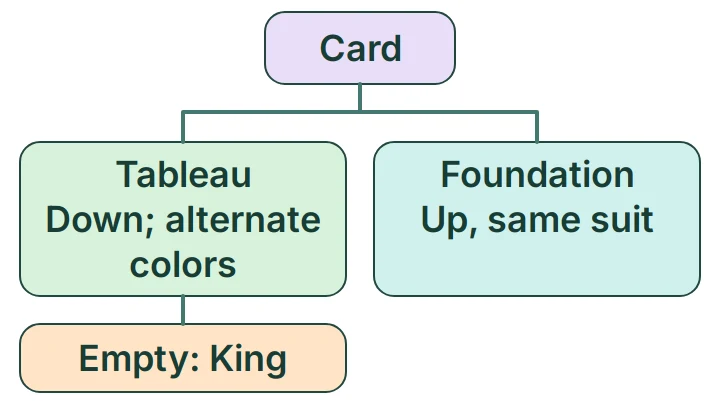
An empty column has a special rule. It takes a King, or a face-up run that starts with a King. Your red 6 needs another place, even when that blank space looks tempting (Cleverini, n.d.-a).
That explains where a card can go. The next question is what moving it will uncover.
Suppose a black 9 sits above a red 8 and a black 7. That whole run fits on a red 10. The black 9 is the card that must match the destination.
Moving the run may expose a face-down card, which then turns over. The newly shown card may give you a choice you could not see before. Your red 6 could now have a black 7 waiting for it.
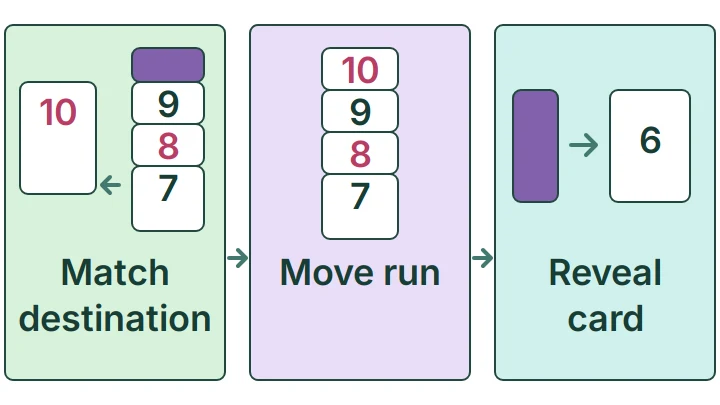
Cleverini’s tips suggest uncovering face-down cards first (Cleverini, n.d.-a). Here is what the two parts of that check mean:
| Check | What it tells you |
|---|---|
| Does the first card fit? | Whether the run has a legal destination |
| Is a face-down card underneath? | Whether the move will reveal a card |
| Is the exposed space empty? | Whether the King-only rule will apply |
A legal move can reveal a card without leading to a win. Still, you can now explain what that move changed on the table. When no useful move appears, the stock becomes the next part of the deal.
Draw 1 is a simple starting choice for a first game, following the page’s relaxed-game description (Cleverini, n.d.-a). Each tap turns one card while the tableau and foundation rules stay the same.
When no useful table move appears, tap the stock. In this version, tapping again after it runs out turns the waste pile over (Cleverini, n.d.-a).
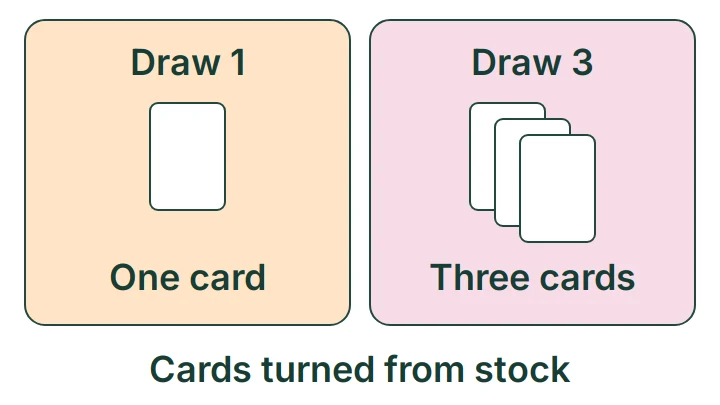
If your goal is to play solitaire faster, the rules give you something concrete to check. A move has to fit its destination regardless of how quickly you spot it. Neither draw setting comes with a supported speed promise here.
Quick tip · Remember this
Quick tip: Before moving a run, check its first card against the destination’s rank and color (Cleverini, n.d.-a).
This scan gathers the page’s rules and tips into a suggested order. It gives each part of the board a turn. The first legal move you find may still leave you stuck.
Undo lets you step back and test a different move order (Cleverini, n.d.-a). For example, two runs might fit one destination. Moving either run changes which card becomes visible underneath.
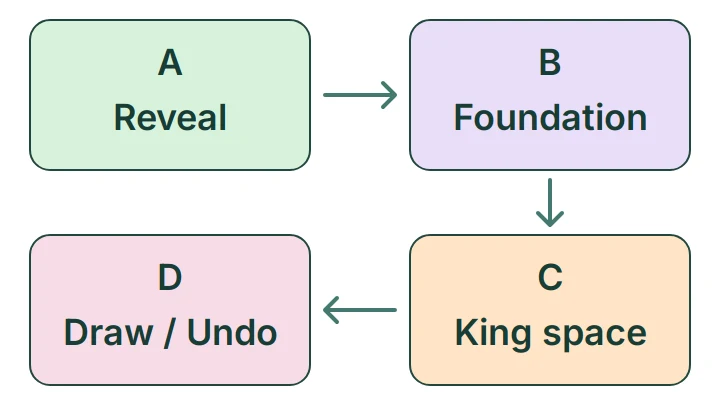
For a focused replay, compare what each move reveals from that same point (Cleverini, n.d.-a). This is a suggested way to use Undo; its effect on future play has not been tested here.
All cards known is the key condition behind the estimate. Your ordinary deal leaves cards out of sight. The number therefore cannot tell you how often you should win on Cleverini.
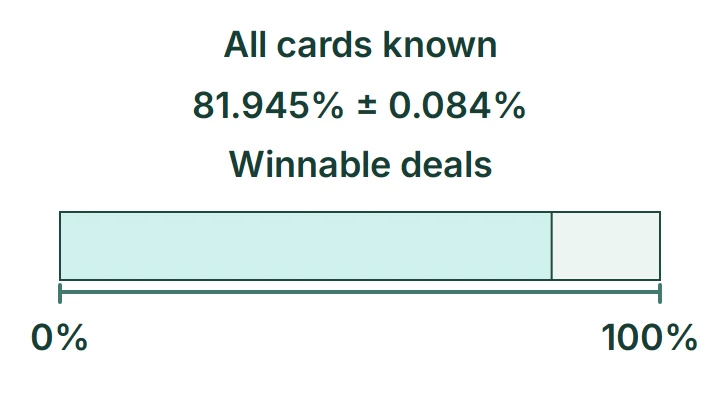
The useful question for your next deal is smaller: does this card fit, and what would moving it expose? Those are choices you can describe with the rules in view.
For a different optional puzzle, try Sudoku (Cleverini, n.d.-b). Its grid uses digits 1–9, with each digit appearing once per row, column, and small box. Solitaire uses ranks, colors, and suits to define its moves.
 Sudoku
Cleverini’s public research snapshot lists 66 games and 876 players at 2026-11-23T03:10:47Z. These are descriptive site counts; they measure neither solitaire win rates nor gains caused by play (Cleverini research, 2026).
Common questions
- What is the difference between Draw 1 and Draw 3? Draw 1 turns one stock card at a time. Draw 3 turns three at a time (Cleverini, n.d.-a).
- When can a King move to an empty column? An empty tableau column can take a King on its own or a face-up run that starts with a King (Cleverini, n.d.-a).
- What should I check before drawing? Try the suggested scan: a revealing tableau move, a foundation move, then a King for an empty column (Cleverini, n.d.-a).
- Does the 81.945% estimate describe ordinary play? It describes thoughtful Klondike, where every card’s rank and suit are known (Blake & Gent, 2026).
- How can kids start learning solitaire? Try Draw 1 and explain one legal move before making it. This is a suggested starting routine (Cleverini, n.d.-a).
Sources
-
(Blake & Gent, 2026). Charlie Blake, Ian Gent. (2026). The Winnability of Klondike Solitaire and Many Other Patience Games. Journal of Artificial Intelligence Research. Source.
-
(Cowling et al., 2012). Peter I. Cowling, Colin D. Ward, Edward J. Powley. (2012). Ensemble Determinization in Monte Carlo Tree Search for the Imperfect Information Card Game Magic: The Gathering. IEEE Transactions on Computational Intelligence and AI in Games. Source.
-
(Cleverini research, 2026). Cleverini research. (2026). Cleverini public research snapshot (2026-11-23T03:10:47Z). Cleverini research. Source.

More from the blog
Chess puzzles: ask what changed in the position
Before hunting for a clever move, inspect the position that is actually on the board. A change-focused checklist can give your puzzle search a sensible starting point.
Sudoku: choose the next question, not a random square
When a Sudoku feels stuck, a useful question is often more valuable than another guess. Narrow your next inspection to one row, column, box, or digit.

