
Count up from the price to the amount paid: the money you add on the way is the change.
How to Make Change Fast: Count Up From the Price
Learn how to make change by counting up from the price, rehearse two $20 sales, and handle a customer who adds a coin during the count.
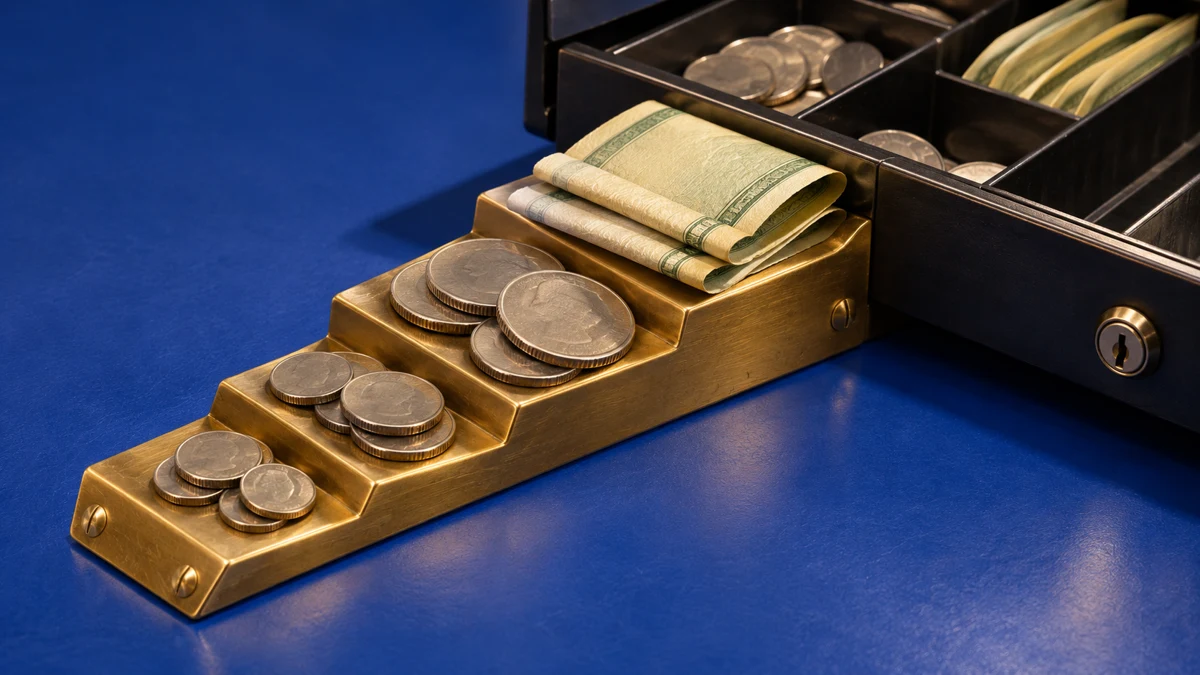
Count up from the price to the amount paid. To practice how to make change, start with coins to reach a whole dollar, then add money until you reach the payment. The cash added along the way is the change.
For a $7.65 purchase paid with $10, the customer gets $2.35 back. The figure separates the money added from the running total, which starts at the price. These examples use US dollars: a dime is 10 cents and a quarter is 25 cents.
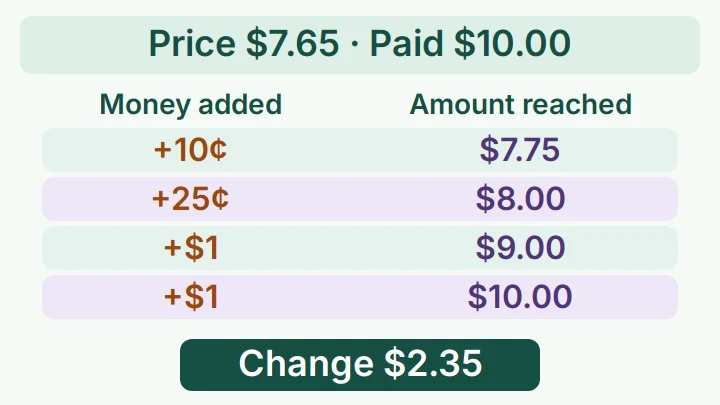
Set each coin or bill beside the previous one, separate from the drawer. Say the running total as each coin or bill goes down: “Seven seventy-five, eight, nine, ten.” Each spoken total marks your place in the count. If the drawer has no quarter for the step from $7.75 to $8, two dimes and a nickel cover it.
Before handing over the money, count the change itself and check that it brings the price up to the payment. If the total doesn't match, leave the money on the counter and count up again, including any coins swapped along the way.
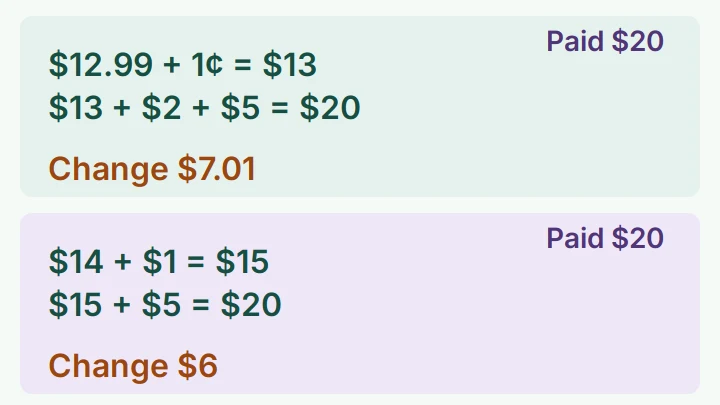
Try the next sale with $20
The .99 price needs a penny to reach the next whole dollar, while the whole-dollar price lets the count start with dollars. In another currency with 100 smaller units to one main unit, the arithmetic stays the same. Local coins can give you different steps to reach the payment.
If the customer adds a coin
An extra coin changes the amount paid and where the count stops. For a $7.65 purchase paid with $10.15, add 35 cents to reach $8, $2 to reach $10, and 15 cents to reach $10.15. The change totals $2.50, which can be returned as two $1 bills and two quarters.
If the customer adds money after counting has begun, pause. Confirm the full payment. Restart from the price with that new stopping point, and follow the shop's procedure for recording a changed payment at a real till.
Tap coins and notes from the drawer, then press Done before the customer's patience bar empties. Read each request before choosing money, since the game includes other shop calculations too. The free Intellect Practitioner Guide has more everyday maths practice.
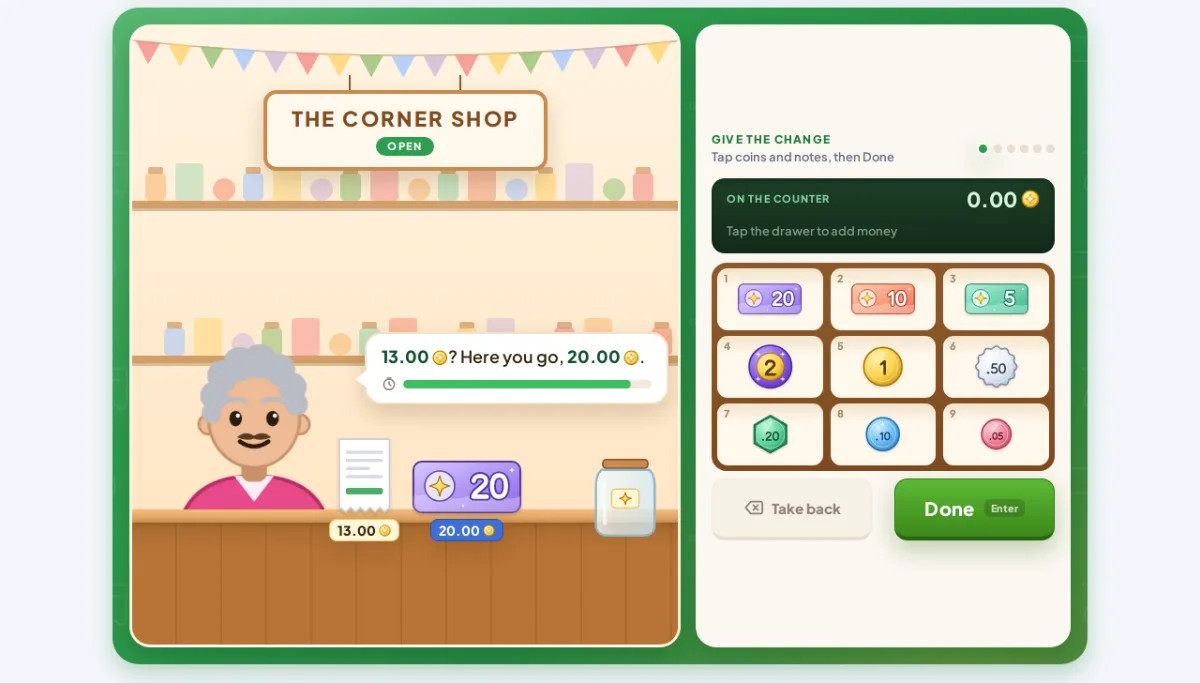 Read the customer's request above the money controls before selecting the change.

More from the blog

How to Stop Procrastinating: Make the First Step Tiny
Learn how to stop procrastinating with tiny homework starts, clear cues, obstacle plans and checkpoints before your deadline.

How to Improve Critical Thinking: 5 Questions to Ask
Learn five questions to check claims, separate facts from assumptions, test rules, and compare options, with clear examples and optional games.

