
Choose the game by its task.
Brain Games for Kids: Free Online Picks by Skill
Choose brain games for kids by skill and age, with free online picks for memory, attention, maths, words and colour perception.
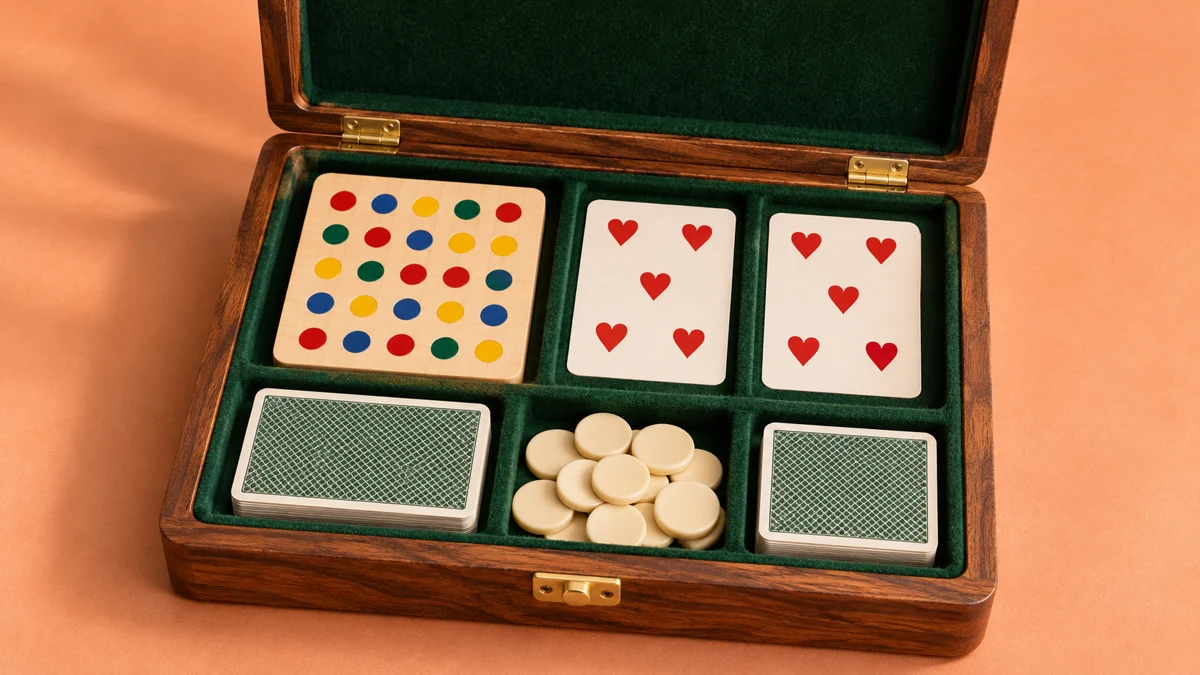
Choose brain games for kids by task. Start with Twin Cards for memory or Colors for attention and colour perception. Choose Mathematics for sums or preview Wordy for words. These free online games let parents and teachers give children practice with something they already understand.
Age guides the first choice, while an opening round shows whether the task fits. For children aged 6–8, start alongside them and check that they understand the cards, colours or sums. Children aged 9–12 can take more responsibility for reading instructions and explaining their choices. The age bands below are suggested starting points, rather than official game ratings.
| Skill | Free pick | Ages 6–8 | Ages 9–12 |
|---|---|---|---|
| 🃏 Memory | Twin Cards | Together; name suits | Try independently |
| 👀 Attention | Colors | Check “most dots” | Try independently |
| 🎨 Perception | Colors | Compare shades together | Check shade differences |
| ➕ Logic and maths | Mathematics | Check sums together | Use familiar sums |
| 🔤 Words | Wordy | Adult previews first | Preview with confident readers |
Remembering cards and spotting colours
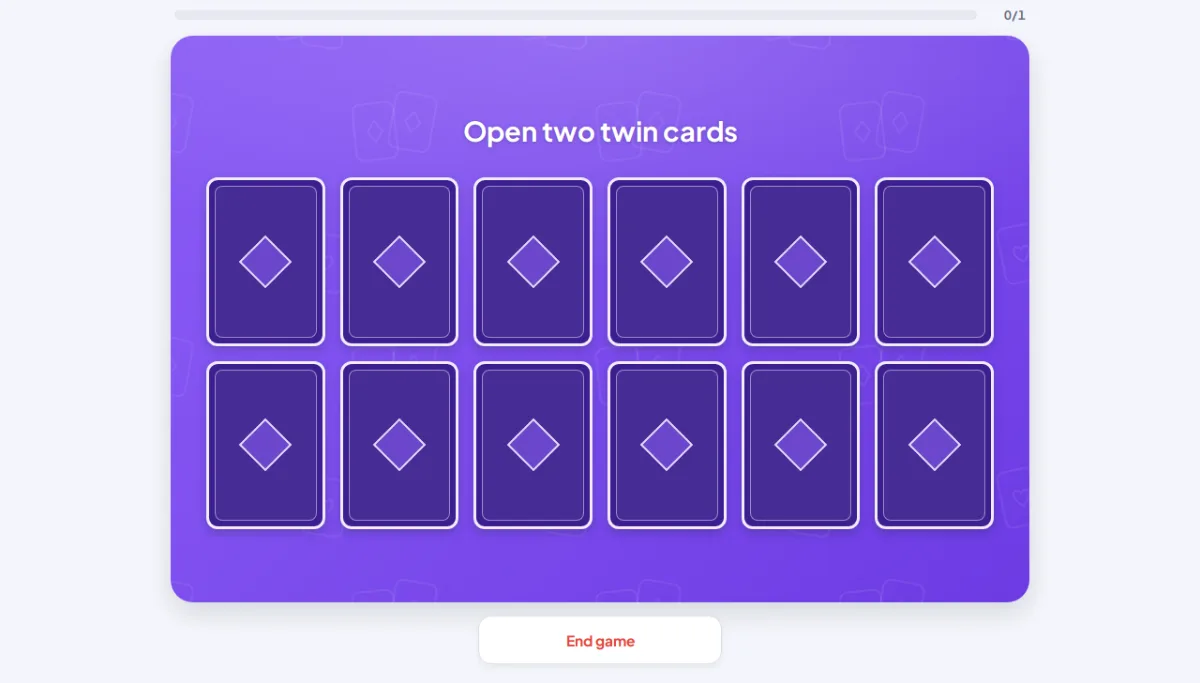
In Twin Cards, the challenge is remembering where pairs lie. Twelve playing cards appear face up for about four seconds before they turn face down, and the child opens two at a time to find the six pairs. The task calls for visual memory and attention to card details.
 Twin Cards
Card knowledge matters for younger children. A child aged 6–8 who recognises the suits can play beside an adult who helps name them. For ages 9–12, the short preview offers an independent memory challenge. Choosing a few positions to remember gives the child a specific job during that preview.
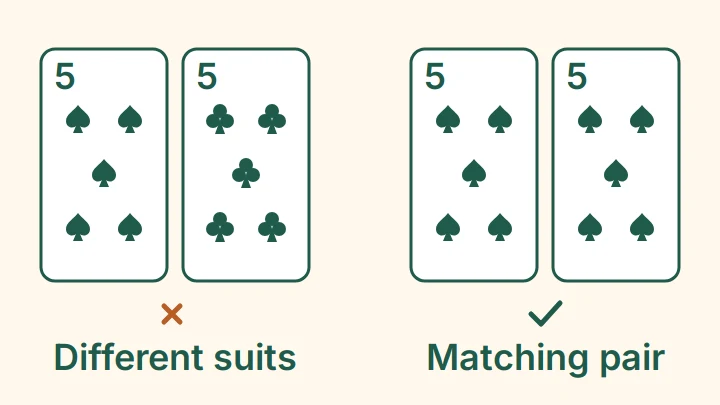
 Look at the card positions and the suit symbols that distinguish otherwise similar cards.
Because matching needs both rank and suit, remembering a number alone leaves out part of the card. A missed turn reveals two locations the child can use on the next turn. An adult can ask where a card appeared before, then leave the child to choose what to turn over.
Colors asks which colour covers the most dots. The child looks across a field of coloured dots and taps a matching swatch before time runs out. This practises attention to the whole display, visual estimation and quick decisions.
 Colors
Perception means telling the shades apart in this game. Later boards bring the quantities and shades closer together. For ages 6–8, share the first round and check that the child understands most. Independent play can suit children aged 9–12 who can compare the shades and are comfortable with the timer.
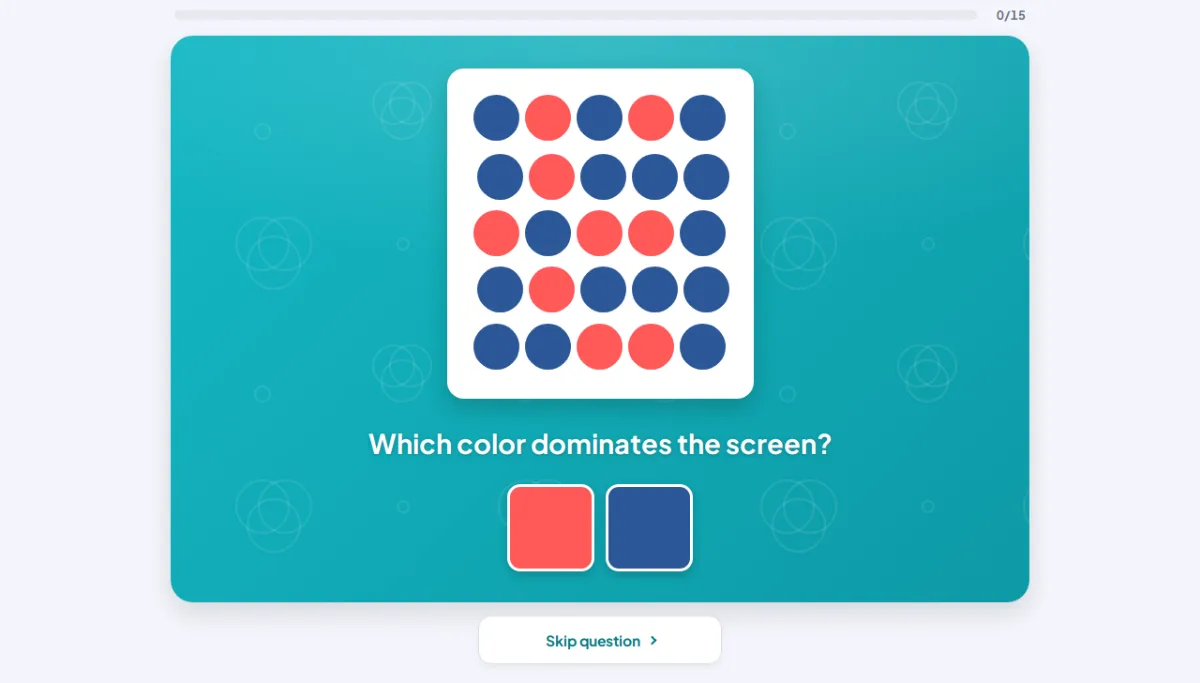 Compare the whole dot field with the answer swatches below it.
Sums, reasoning and words
For children who enjoy number work, Mathematics offers timed mental calculation. Start with familiar sums. In Mathematics, the player solves an equation mentally and taps an answer before time runs out.
 Mathematics
Explaining a calculation adds reasoning practice. For ages 6–8, an adult can check whether the displayed work matches classroom learning before asking how the child worked it out. Children aged 9–12 can explain a method after a round, such as making a ten before adding the rest. That discussion gives a teacher or parent something to assess beyond answer speed.
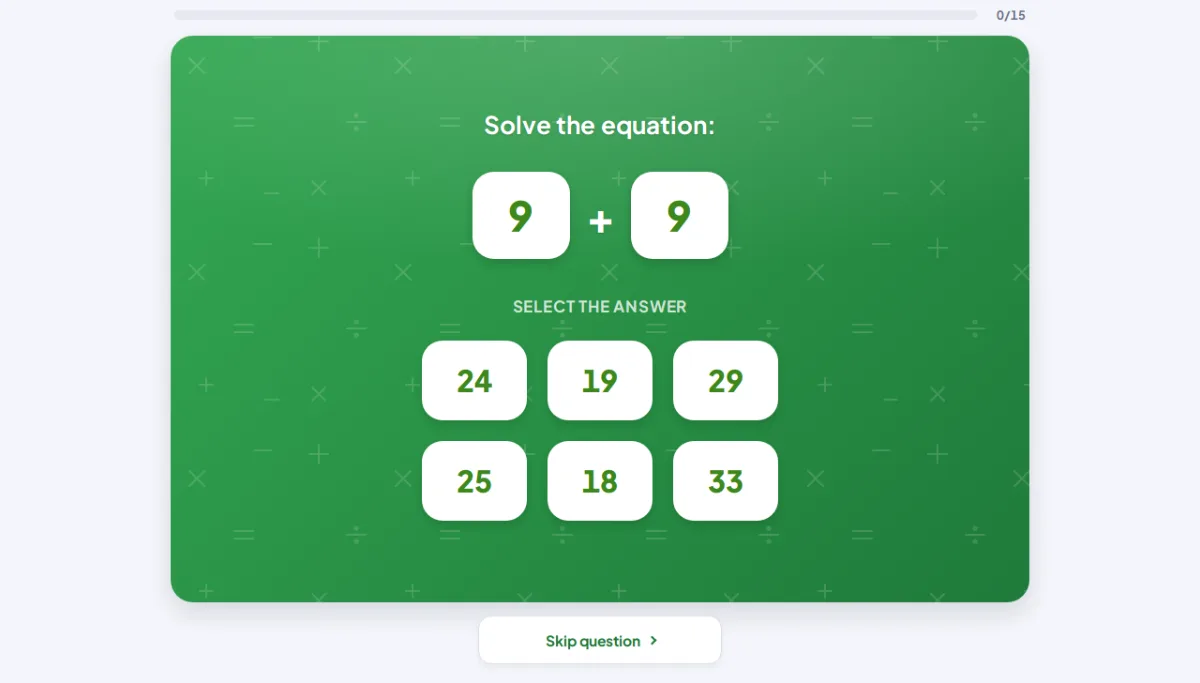 Check whether the equation is familiar before judging how quickly the child answers.
Wordy needs a reading-led preview before it becomes the words choice. Put it on the shortlist for confident readers aged 9–12, then read the instructions together. For children aged 6–8, an adult should handle the first look and decide whether the language is within reach. If every instruction needs adult help, keep it as a shared activity.
The brain-training games page groups other games by skill when these picks do not match the intended practice. Its categories include memory, attention, maths and words. A teacher choosing a number activity can browse maths, while a parent choosing a remembering task can browse memory.
Remember this
These Cleverini games are free and require no sign-up. An adult can open the chosen game in the browser before handing over the device, so the child starts on the intended activity.
A place in the day or classroom
Daily play can stay brief. Choose a few rounds with a clear stopping point, then ask about one choice from the game. Keeping the same task for another session also avoids spending each day's play time learning new rules.
In a classroom, give partners separate jobs. One child can control the mouse while another explains a choice, then they swap roles for the next round. With Mathematics, hearing the method helps a teacher check whether the child understood the sum. With Colors, partners can discuss what they compared before agreeing on a swatch.

More from the blog

How to Keep Your Brain Sharp as You Age: What Helps
Build a mentally active routine with sleep, movement, social contact and enjoyable learning, and see what puzzle and memory-training research shows.
How to Improve Attention Span: Small Daily Steps
Learn five small attention habits, what the studies support, and how to try clearer task steps, brief pauses, phone changes, and sleep time.

